, 5 min read
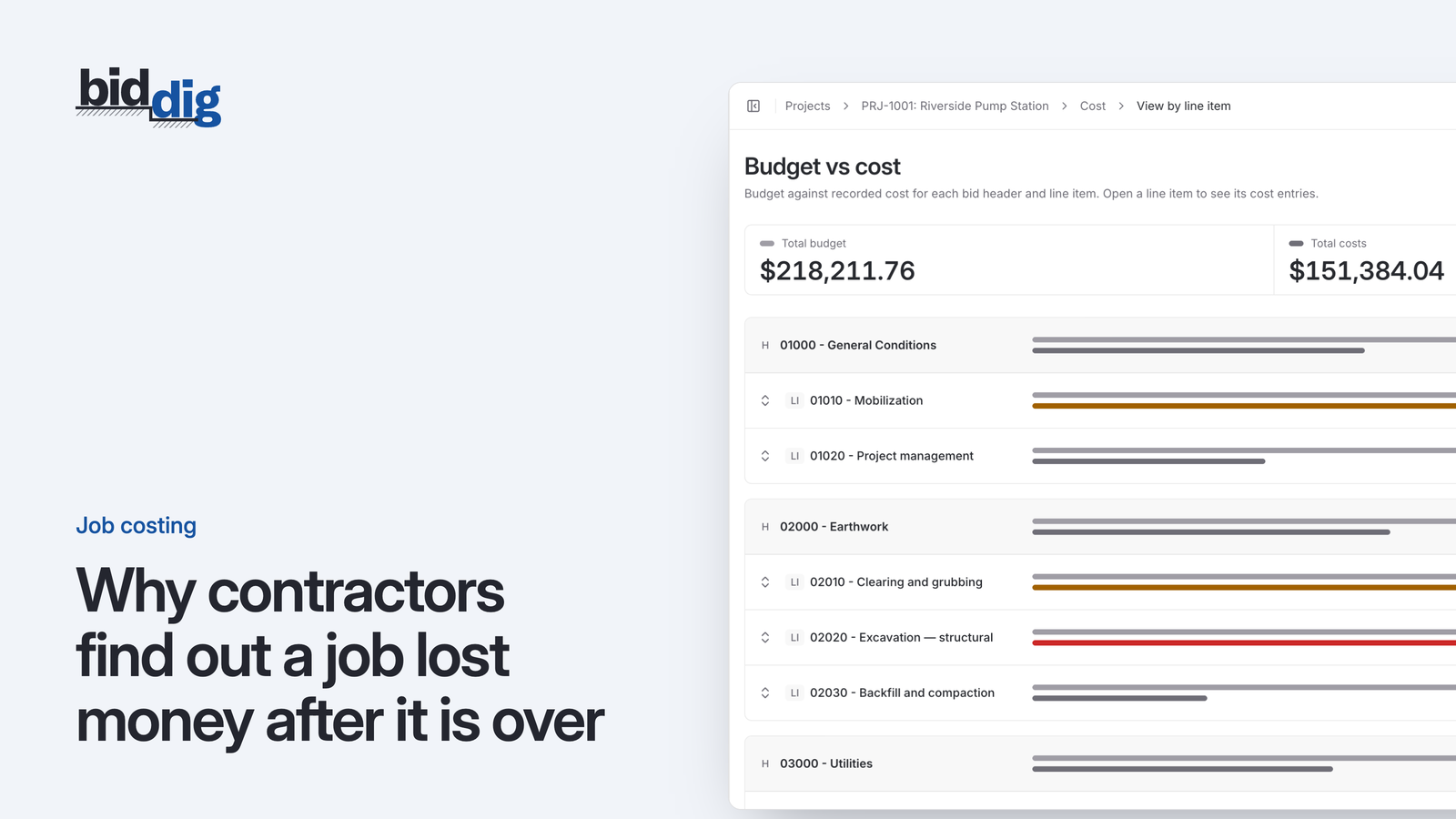
Why contractors find out a job lost money after it is over
The bid lives in one place, the costs in another, under different names and on a different schedule. That gap is why the bad news arrives when nothing can be done about it.
Notes on bidding work and knowing what it cost.
Practical writing on estimating, bidding, job costing and running crews, for the people who price construction work and the people who build it.
, 5 min read
The bid lives in one place, the costs in another, under different names and on a different schedule. That gap is why the bad news arrives when nothing can be done about it.
, 5 min read
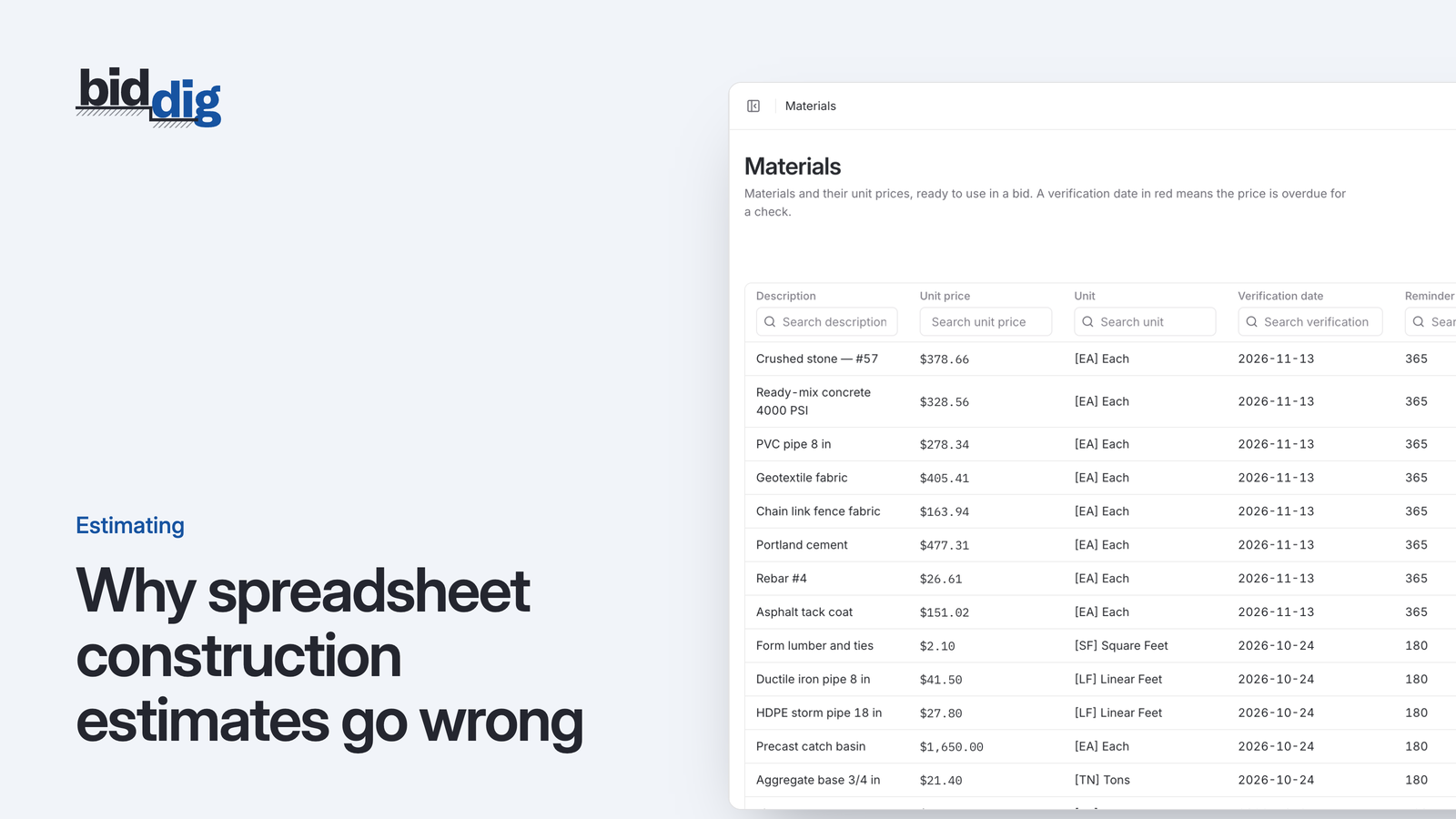
Spreadsheet estimates go wrong because the costs live inside each job file. Copy the file and old rates, broken formulas and one-off adjustments come along unnoticed.
, 6 min read
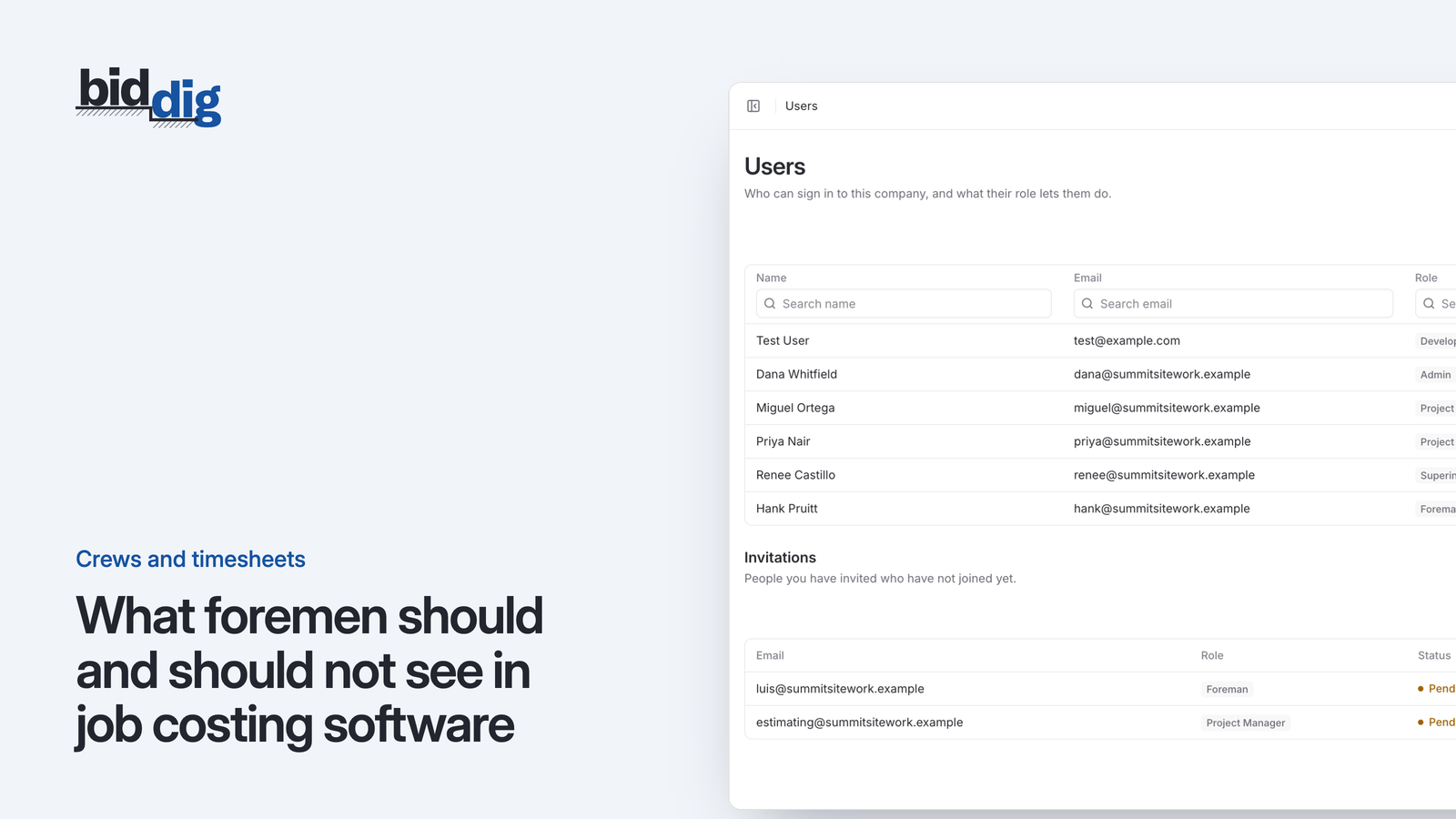
The field needs to know what to build and where to book the hours. It does not need pay rates, margins or the contract file. Here is how to draw that line.
, 5 min read
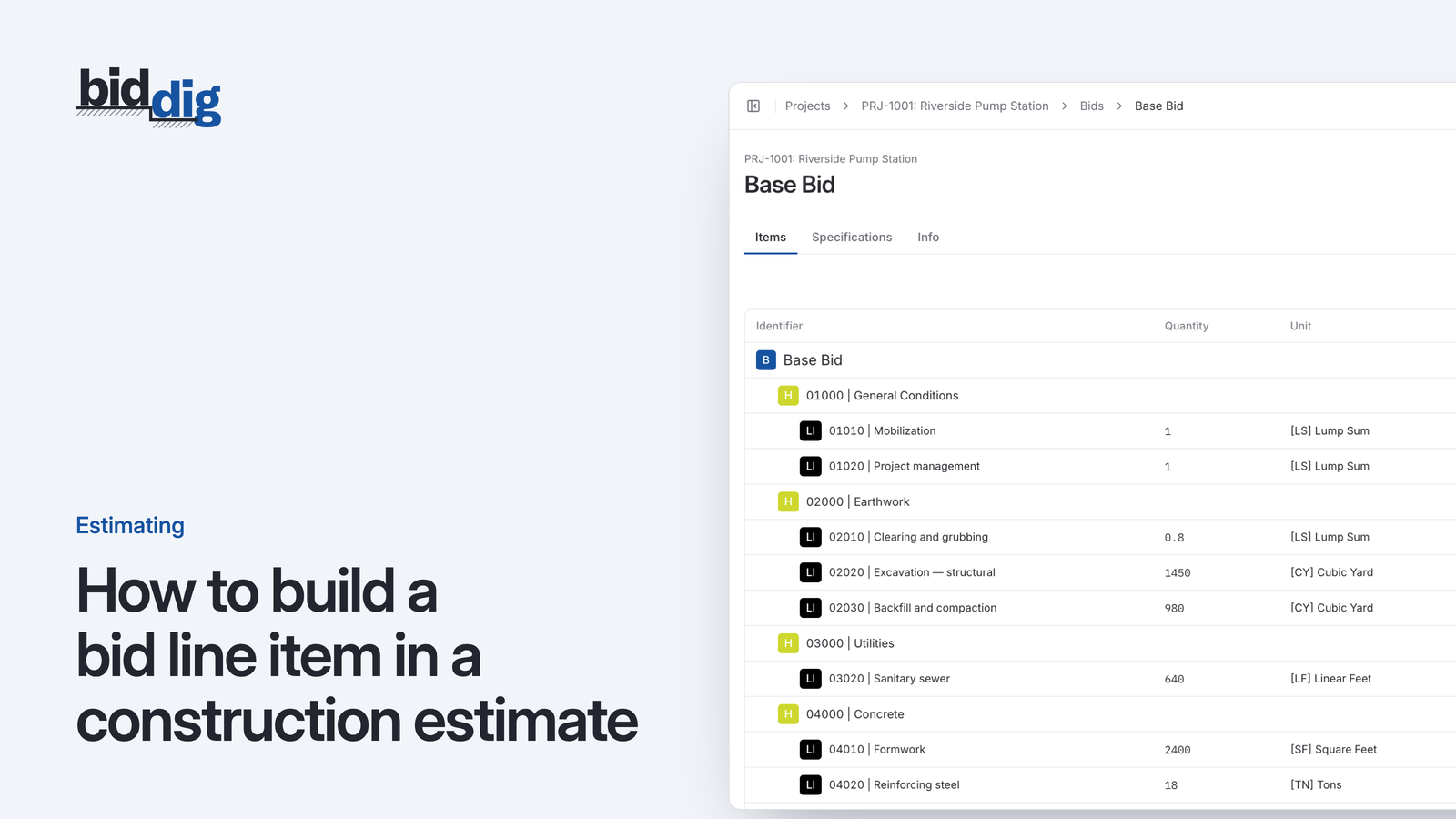
A bid line item is built from five costs. Here is what goes in each, how a production rate drives labor and equipment, and one storm drain line worked through.
, 5 min read
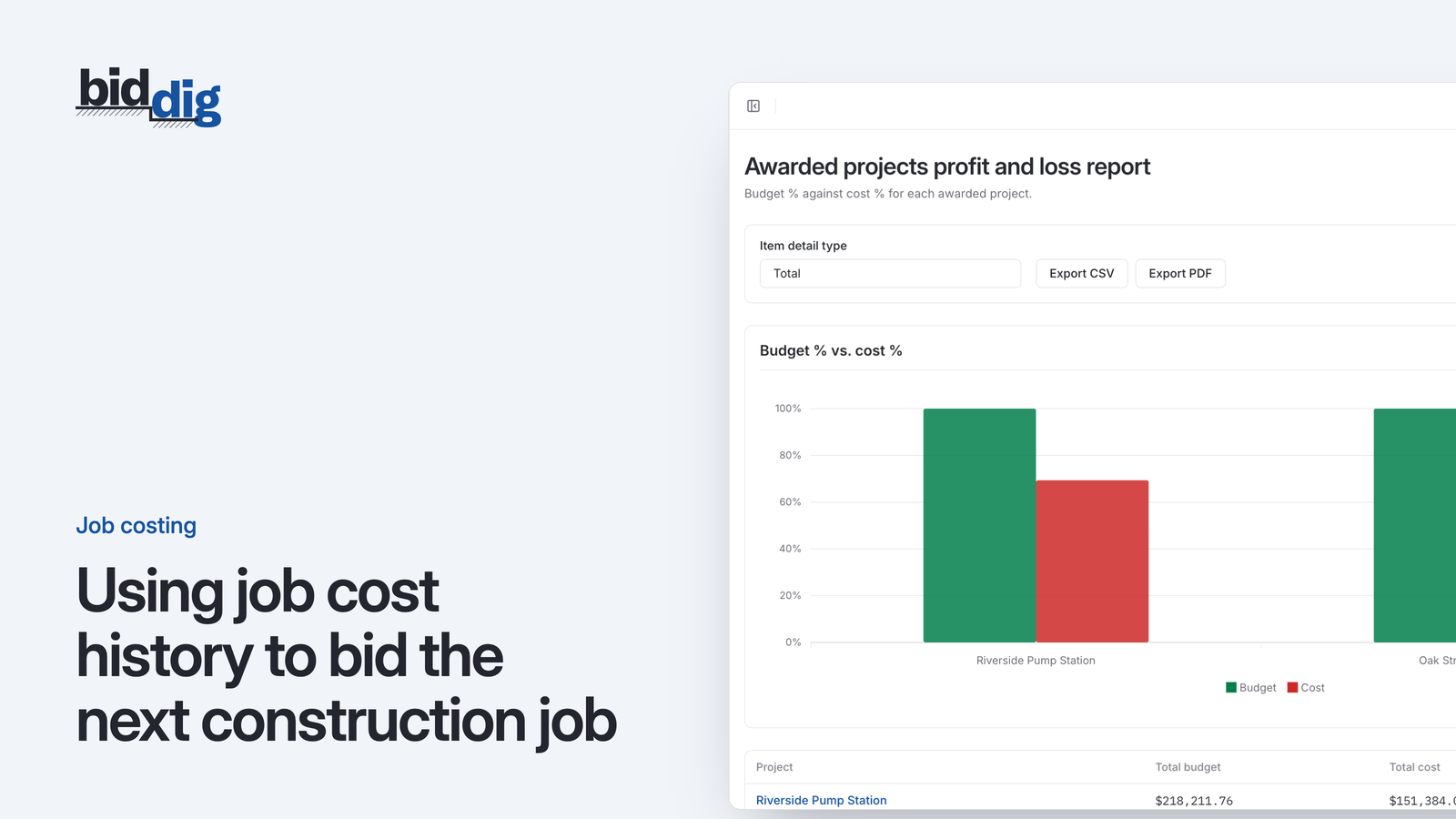
Every finished job is a record of what your crews and prices actually did. Comparing bid lines with actual costs, and feeding the result into your rates, is how estimates get better.
, 5 min read
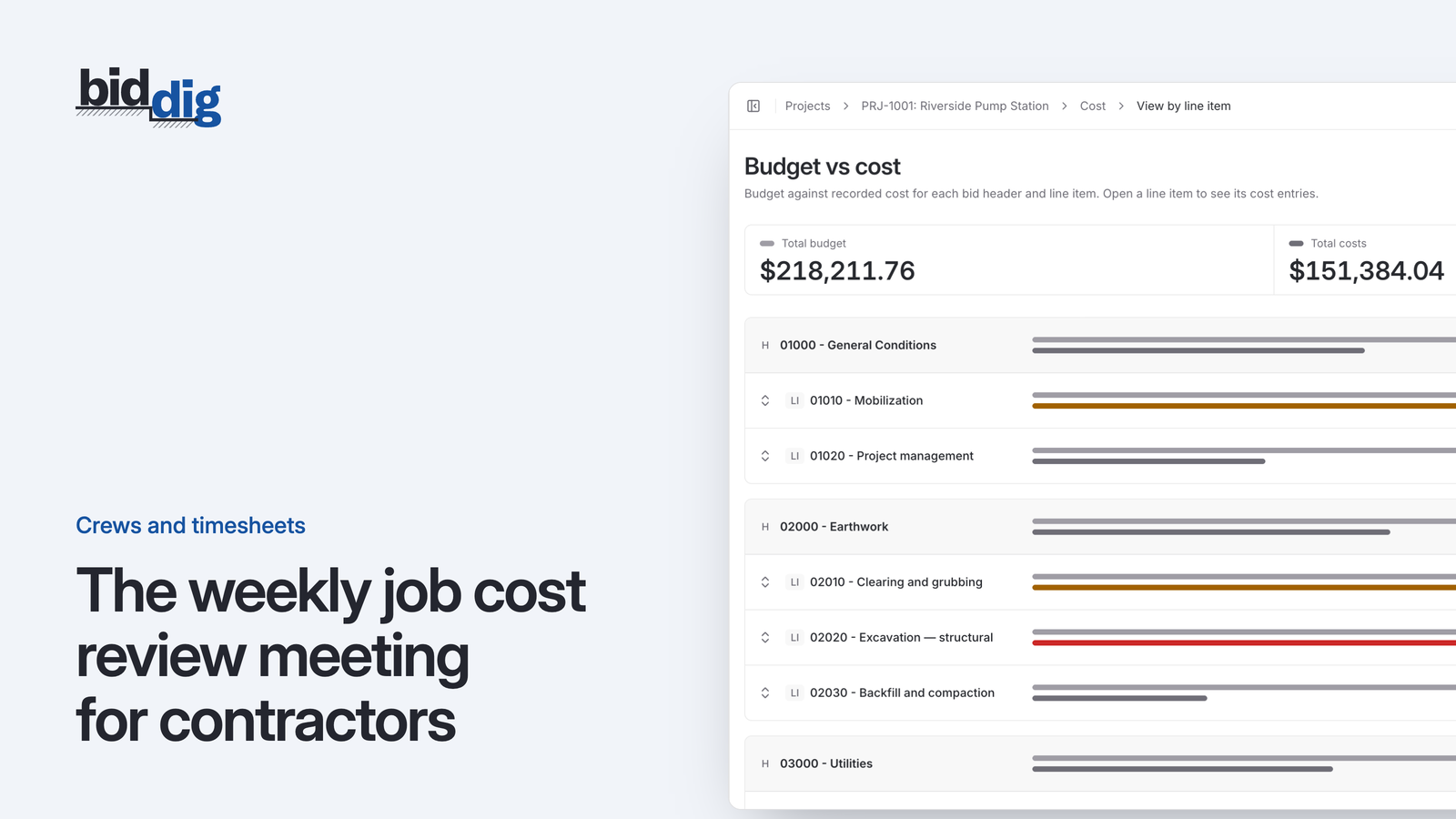
A job cost report nobody reads changes nothing. A short standing meeting each week, with a fixed order and a short list of decisions, is what turns the numbers into action.
, 5 min read
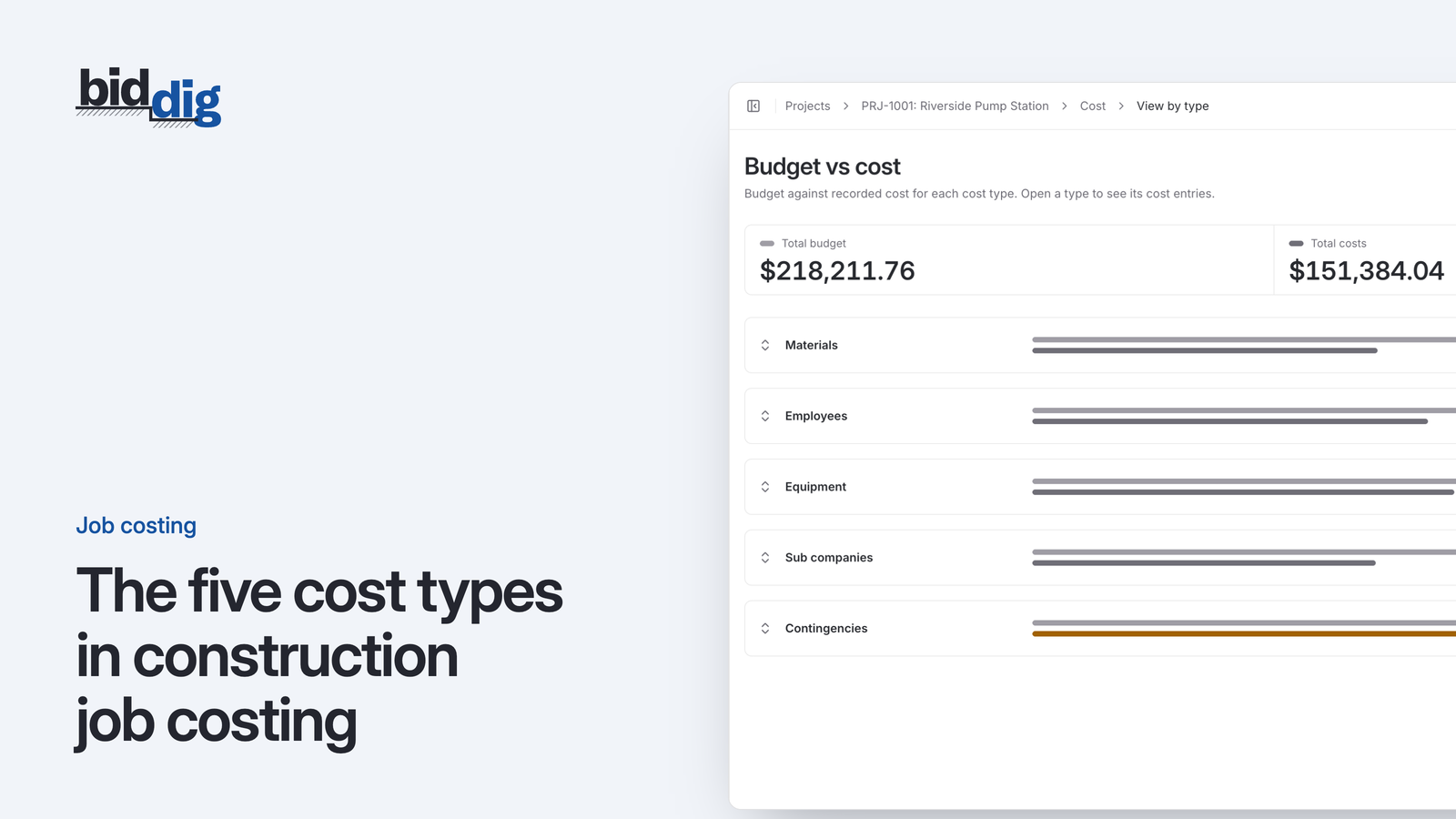
Material, labor, equipment, subcontractor and miscellaneous. What belongs in each, where costs commonly get put in the wrong one, and why it matters for the next bid.
, 5 min read
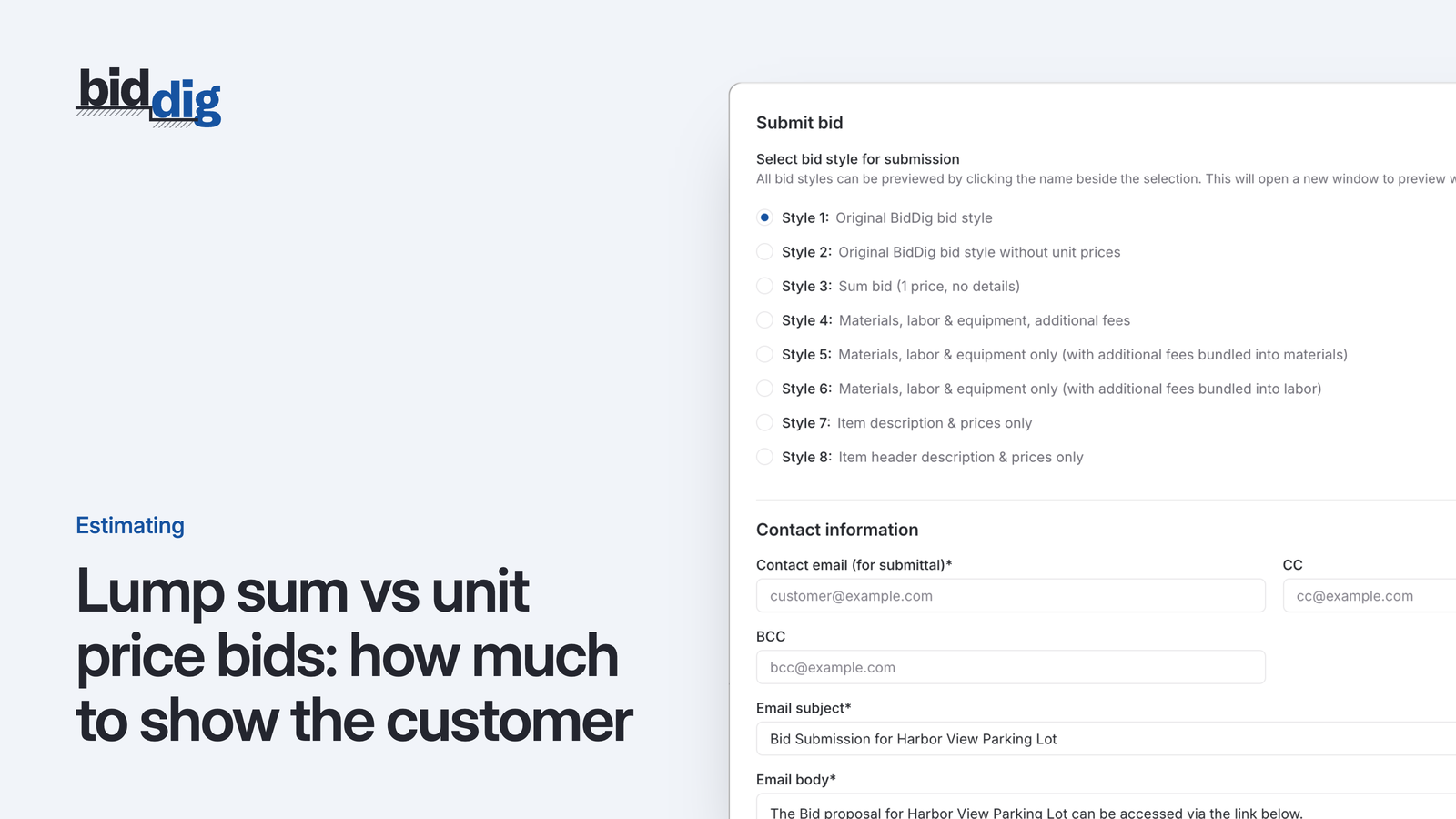
The same estimate can go out as one number or as a page of quantities and rates. Which one you send changes who carries the risk and what the customer argues about.
, 5 min read
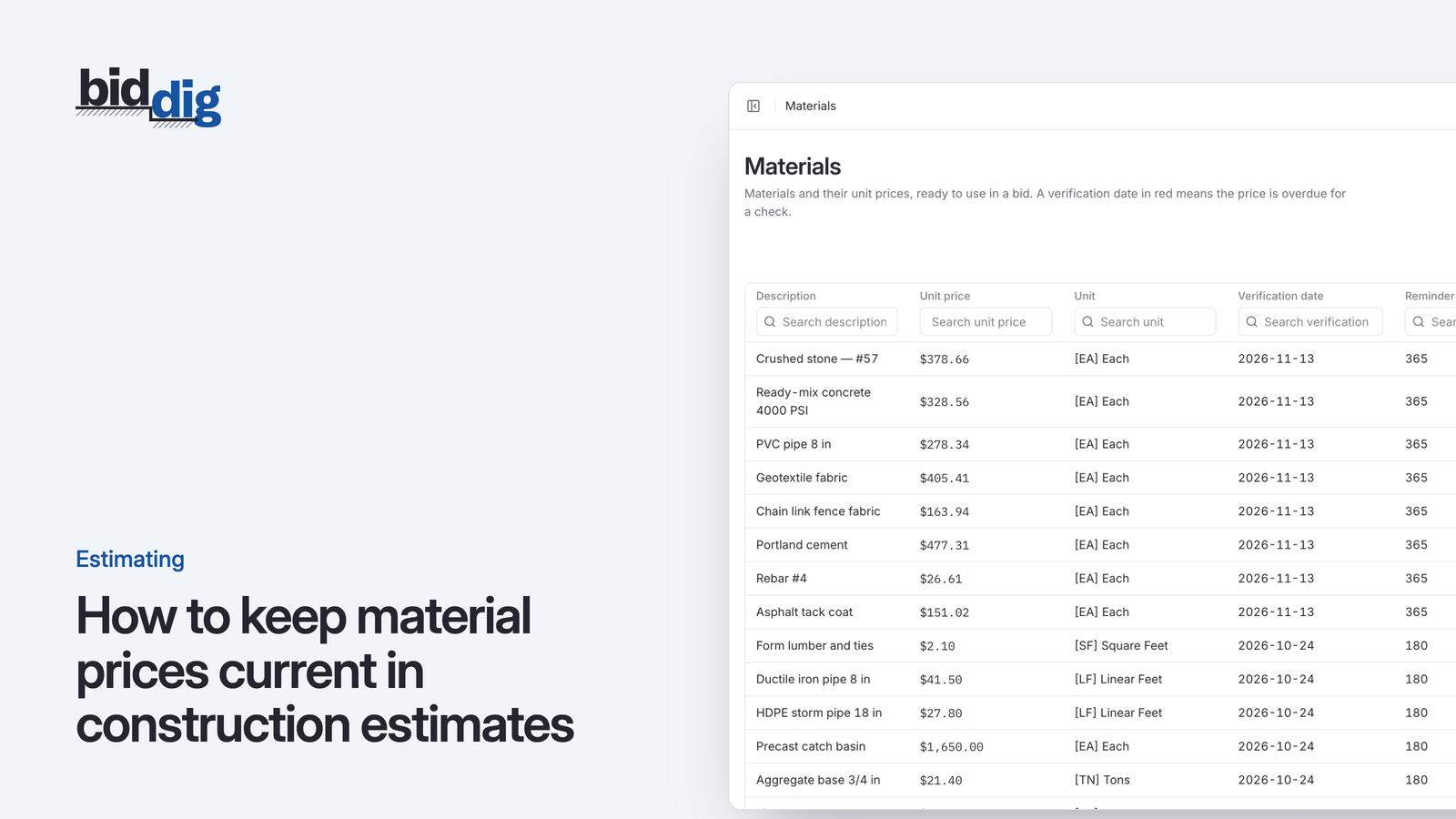
A material price is only true on the day somebody checked it. Here is a routine for re-verifying prices, and ways to protect a bid when prices move after it is sent.
, 5 min read
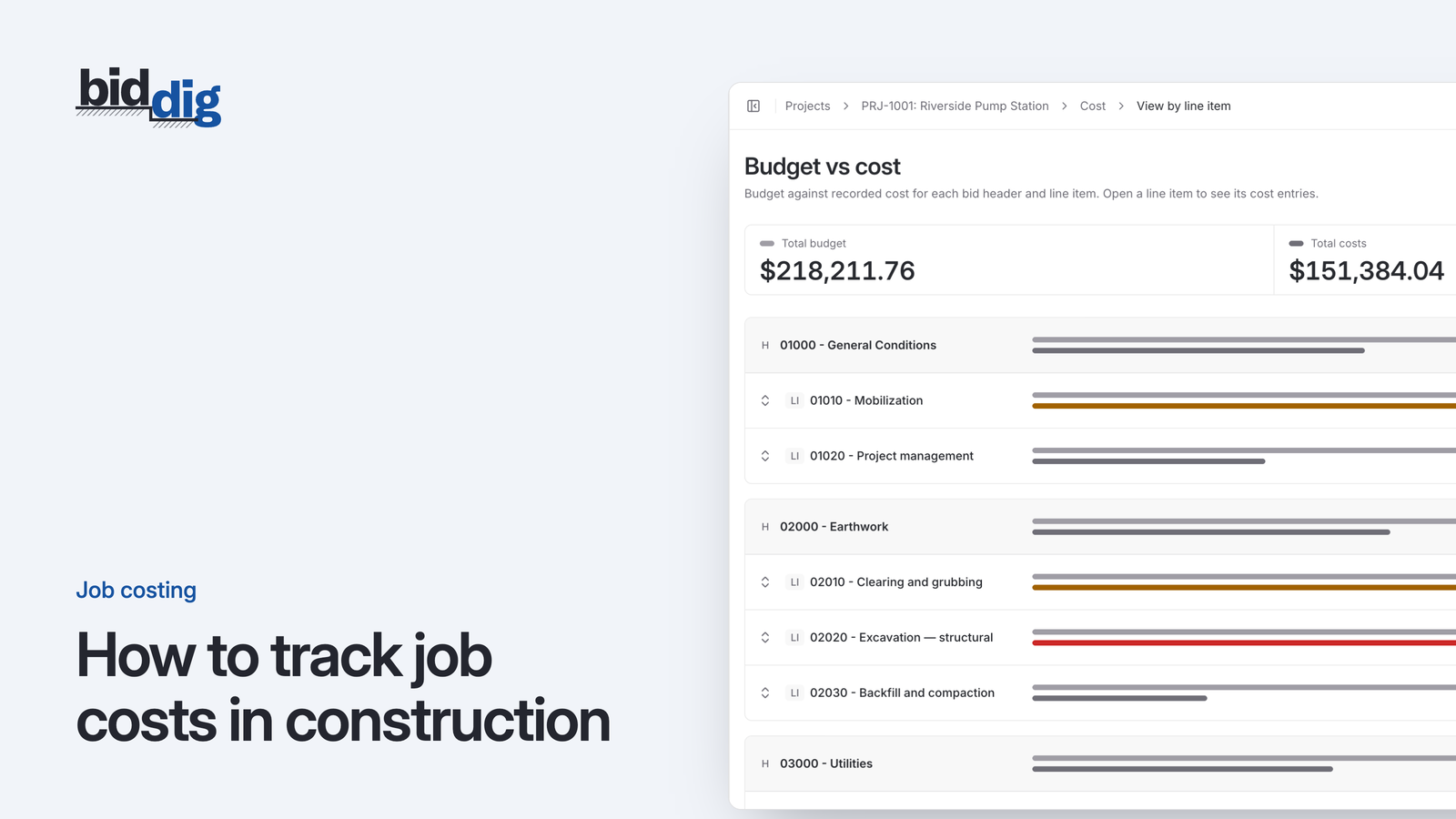
Job costing means comparing what a job was bid to cost against what it is actually costing, line by line, while there is still time to do something about it.
, 6 min read
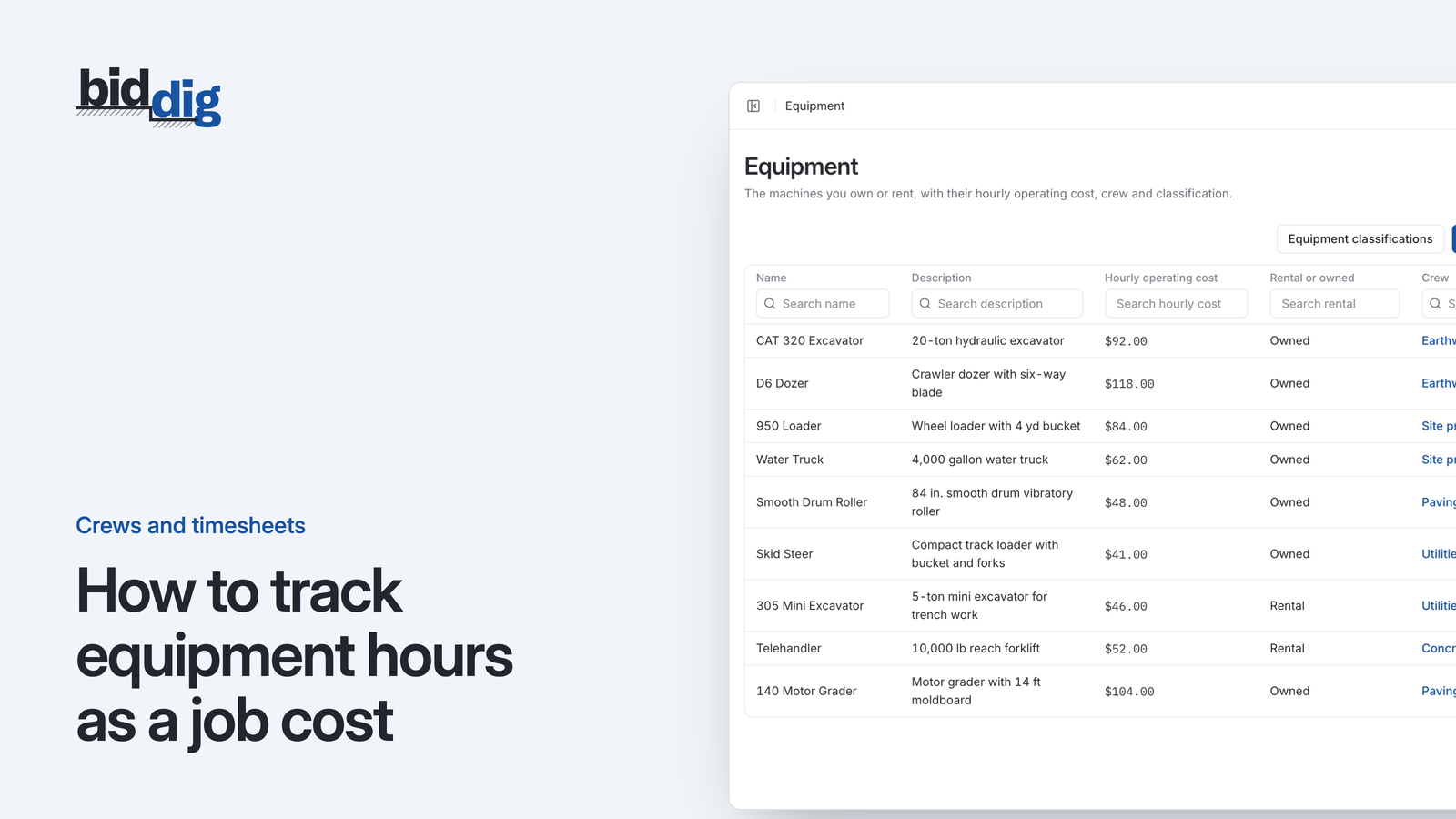
Owned machines do not send an invoice, so their time quietly drops out of job cost. Here is how to record machine hours on the job and charge them to the work they did.
, 6 min read
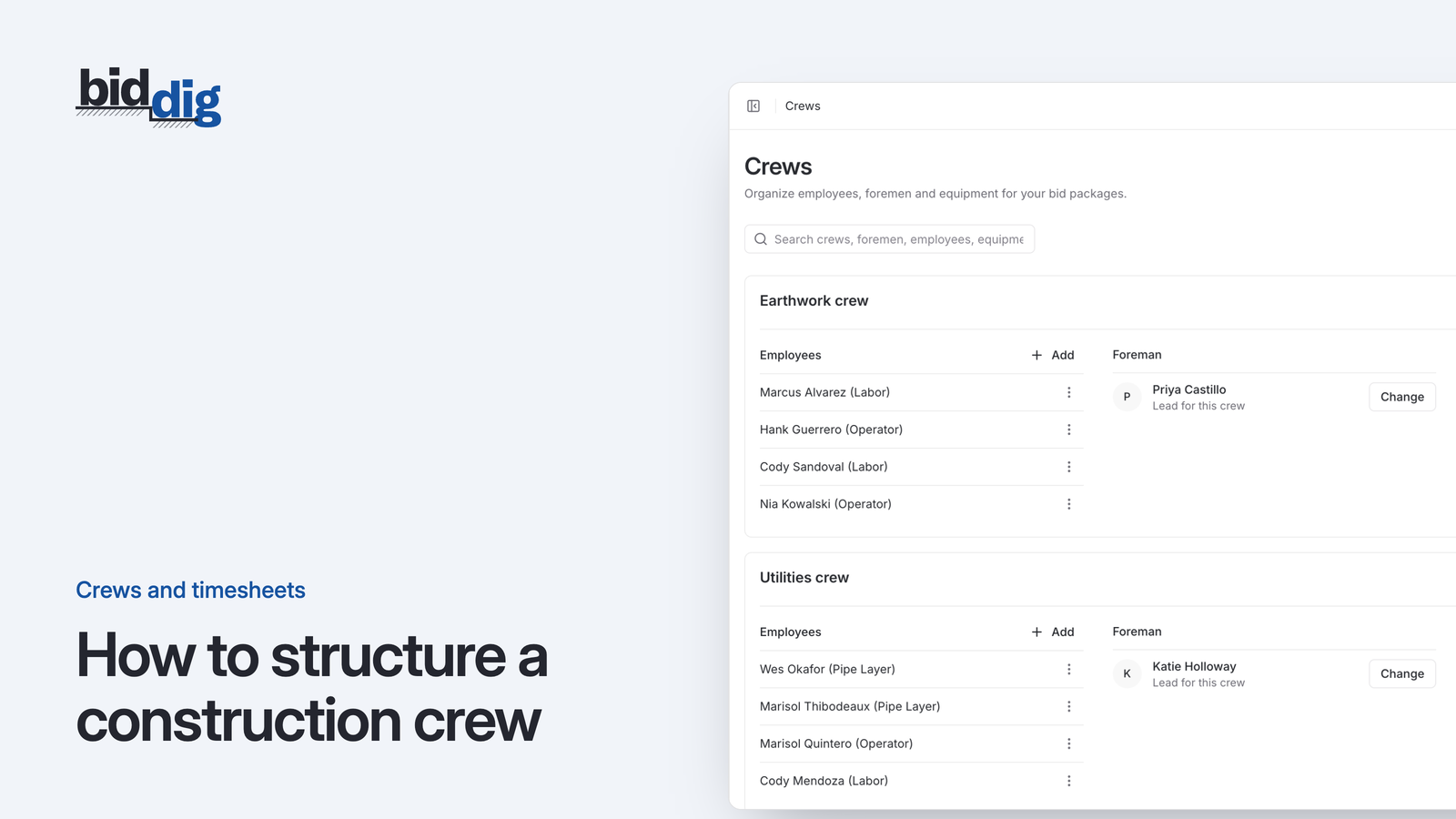
A crew is a set of people and machines that work together under one foreman. Keeping that set stable is what lets you compare one job's costs with the next.
, 6 min read
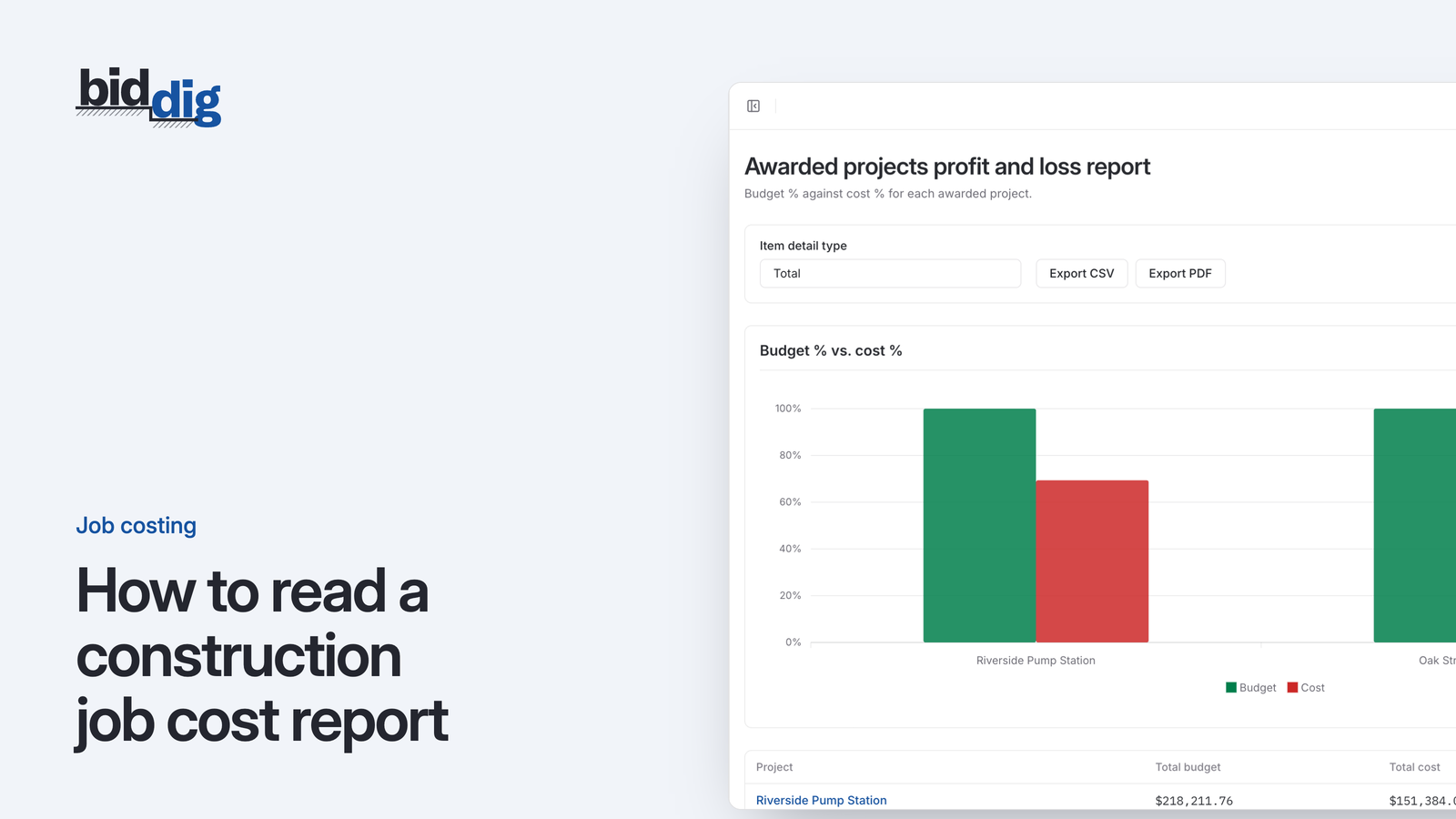
A job cost report is four columns per line: budget, actual, remaining and percent used. Here is an example report read line by line, and what to do about what each line shows.
, 5 min read
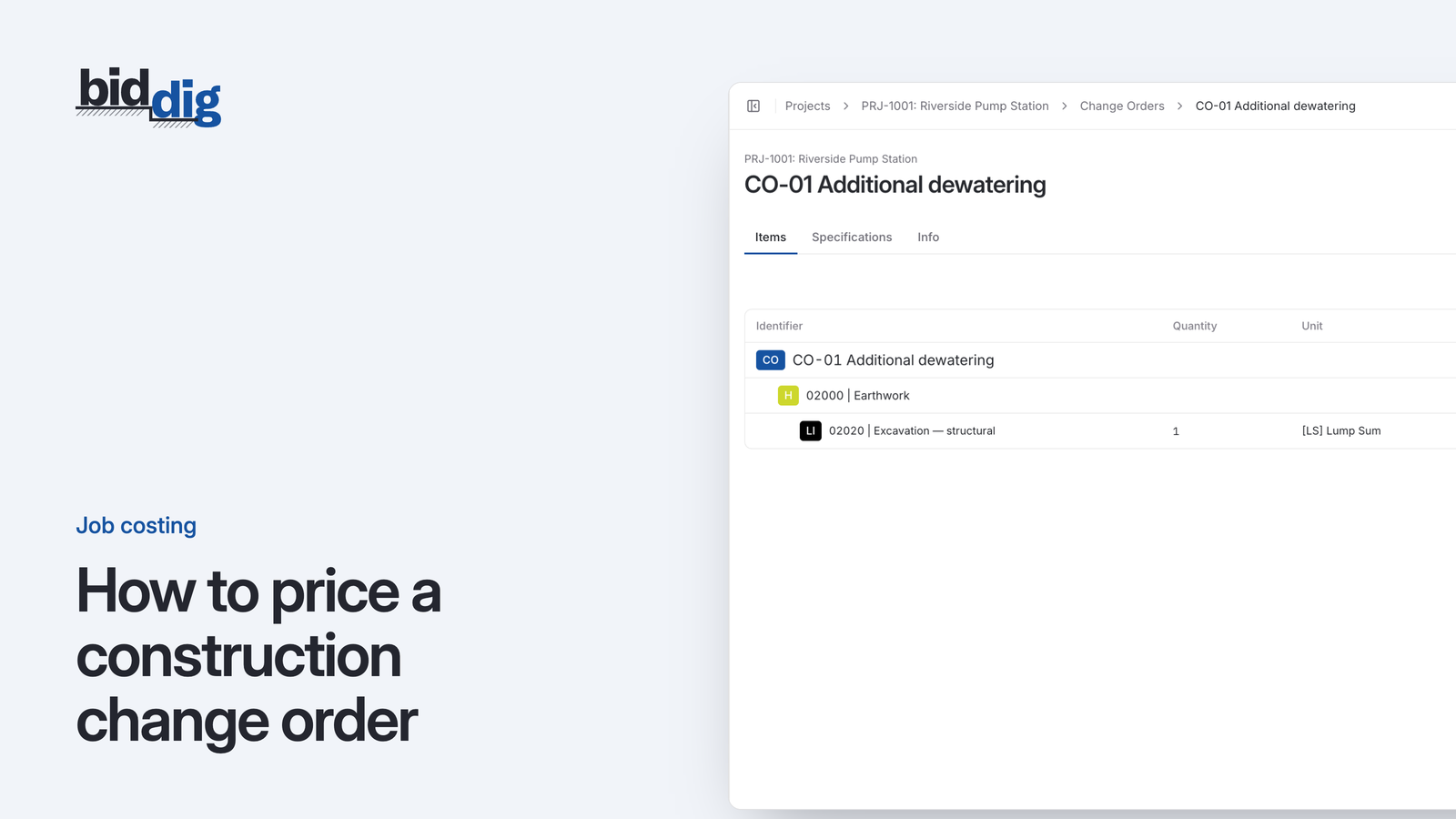
A change agreed with a handshake on site becomes an argument at the end of the job. Pricing each change the way you priced the bid, and getting an answer before the work starts, avoids most of it.
, 6 min read
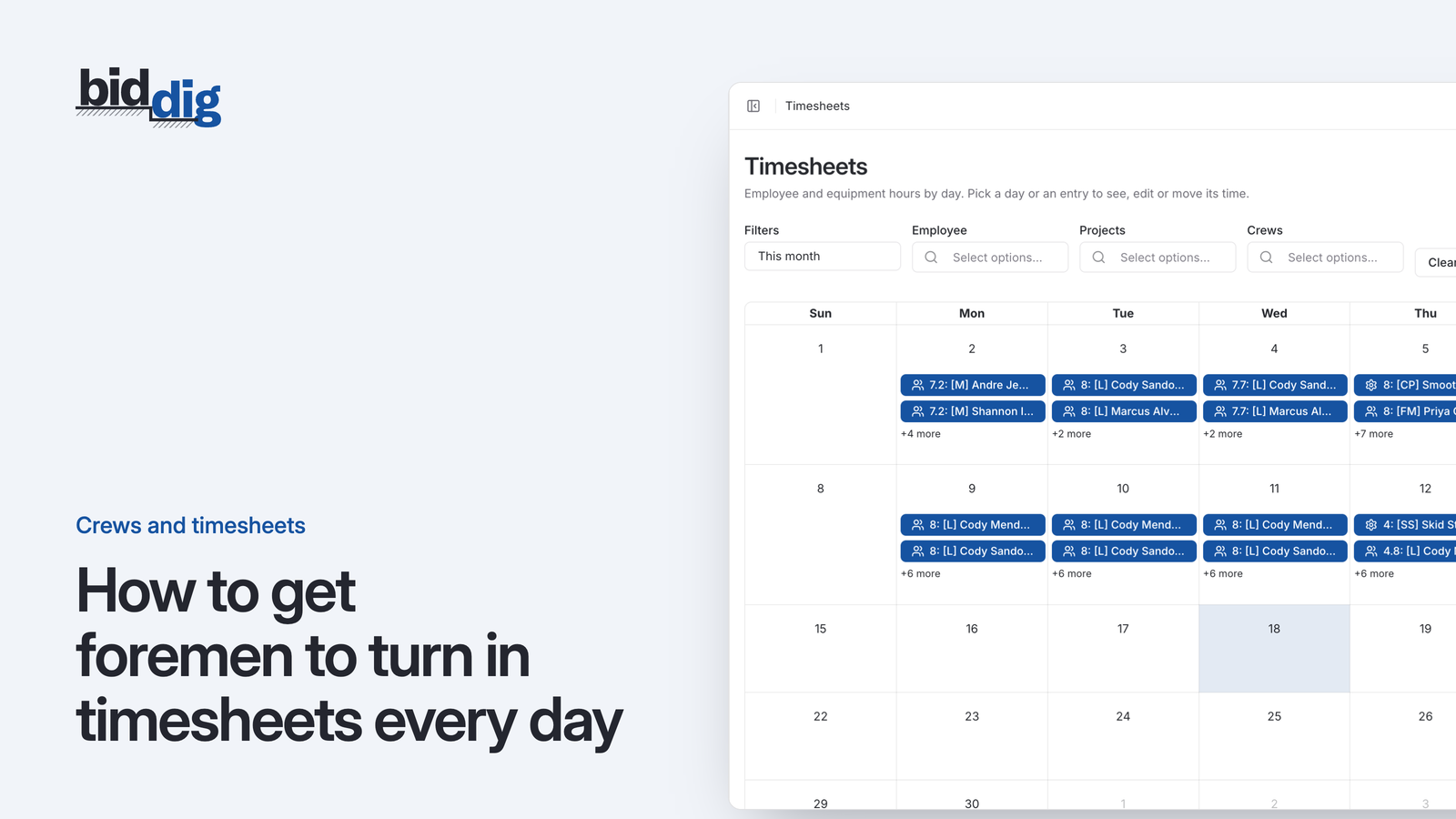
Foremen turn in timesheets on time when the entry is short, tied to a fixed moment in the day, checked every morning and visibly used. Here are the steps.
, 6 min read
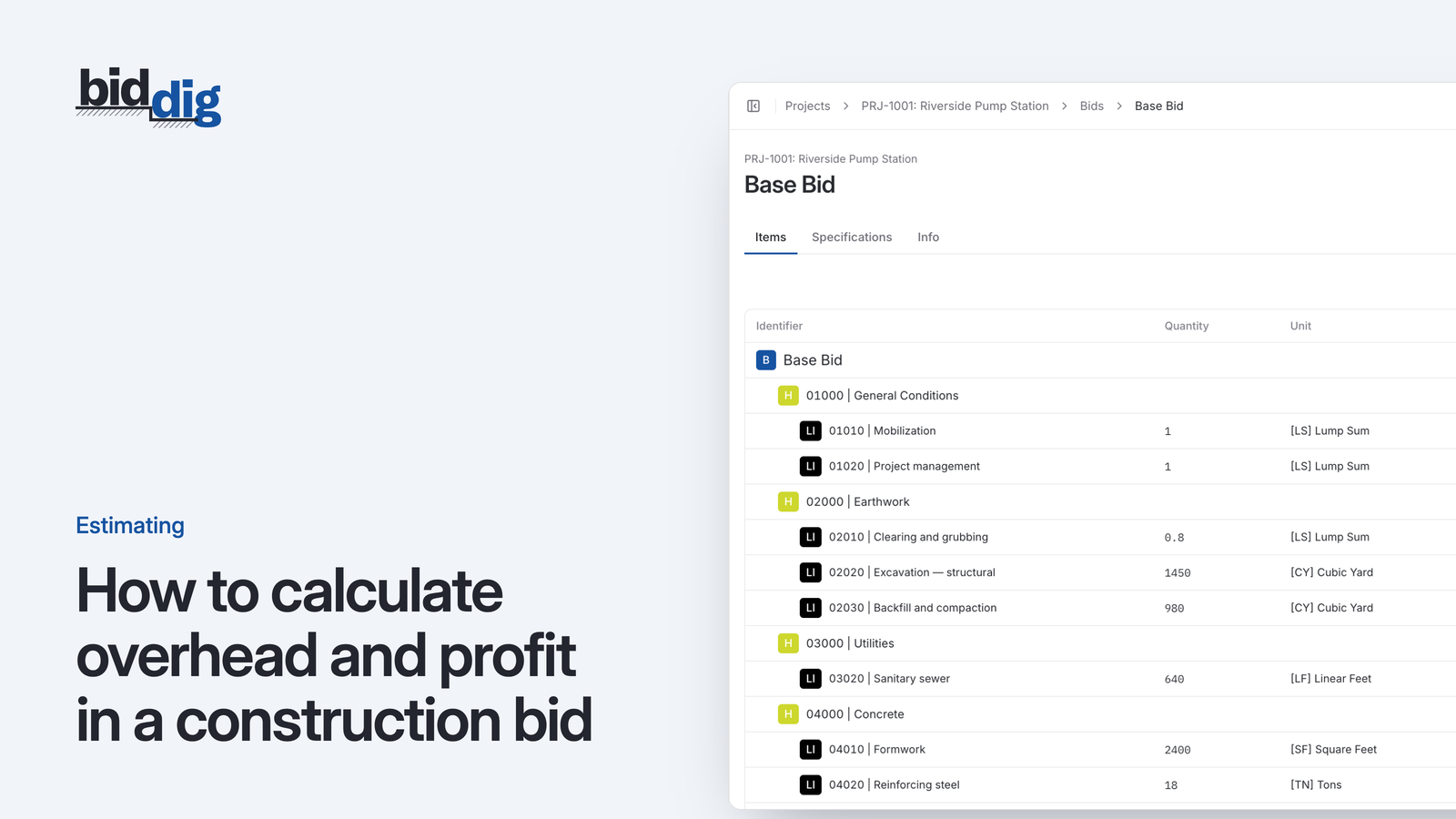
Overhead and profit are two different numbers that do two different jobs. Here is how to find your overhead rate from a year of figures, set a profit rate, and apply both to a bid.
, 6 min read
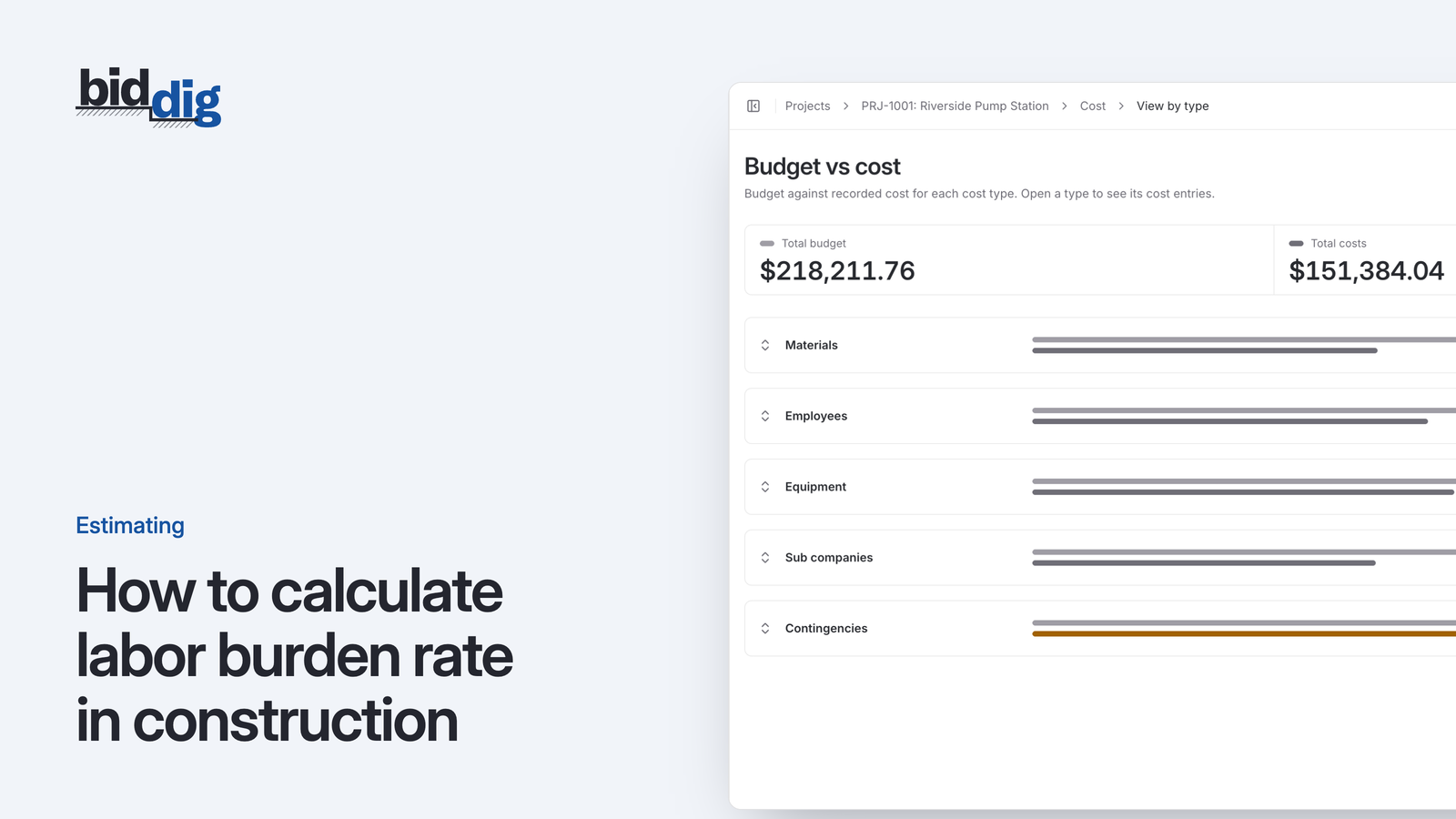
Labor burden rate is annual burden costs divided by annual wages. Here is the formula, what goes into it, and a worked example with every line of arithmetic.
, 6 min read
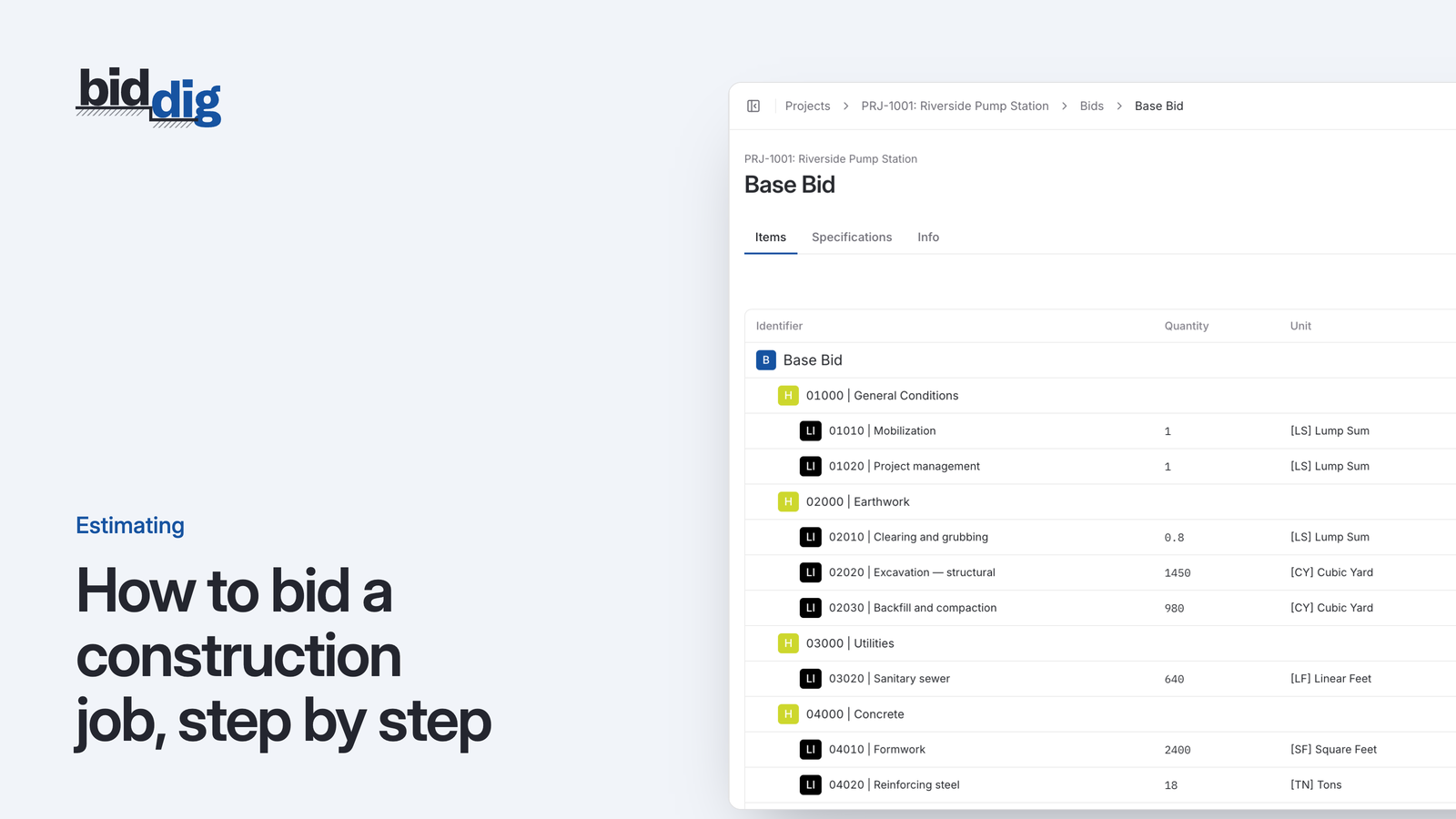
A bid is a cost build-up with markup on top. Here are the steps in order, a worked line item, and the places where bids usually go wrong.
, 5 min read
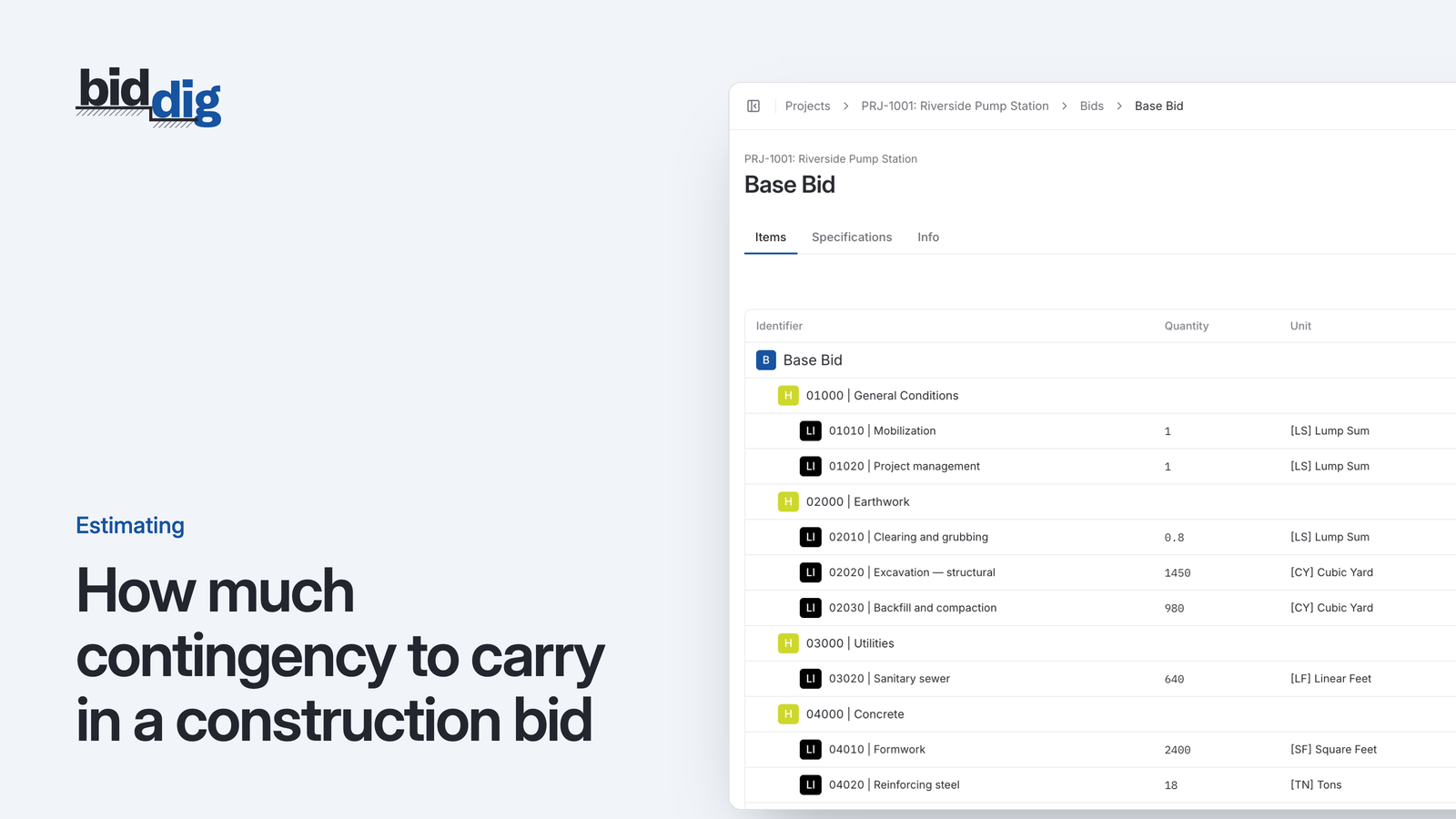
There is no single right percentage. Contingency is a price for specific risks, and the way to size it is to name those risks, price each one and weigh how likely it is.
, 5 min read
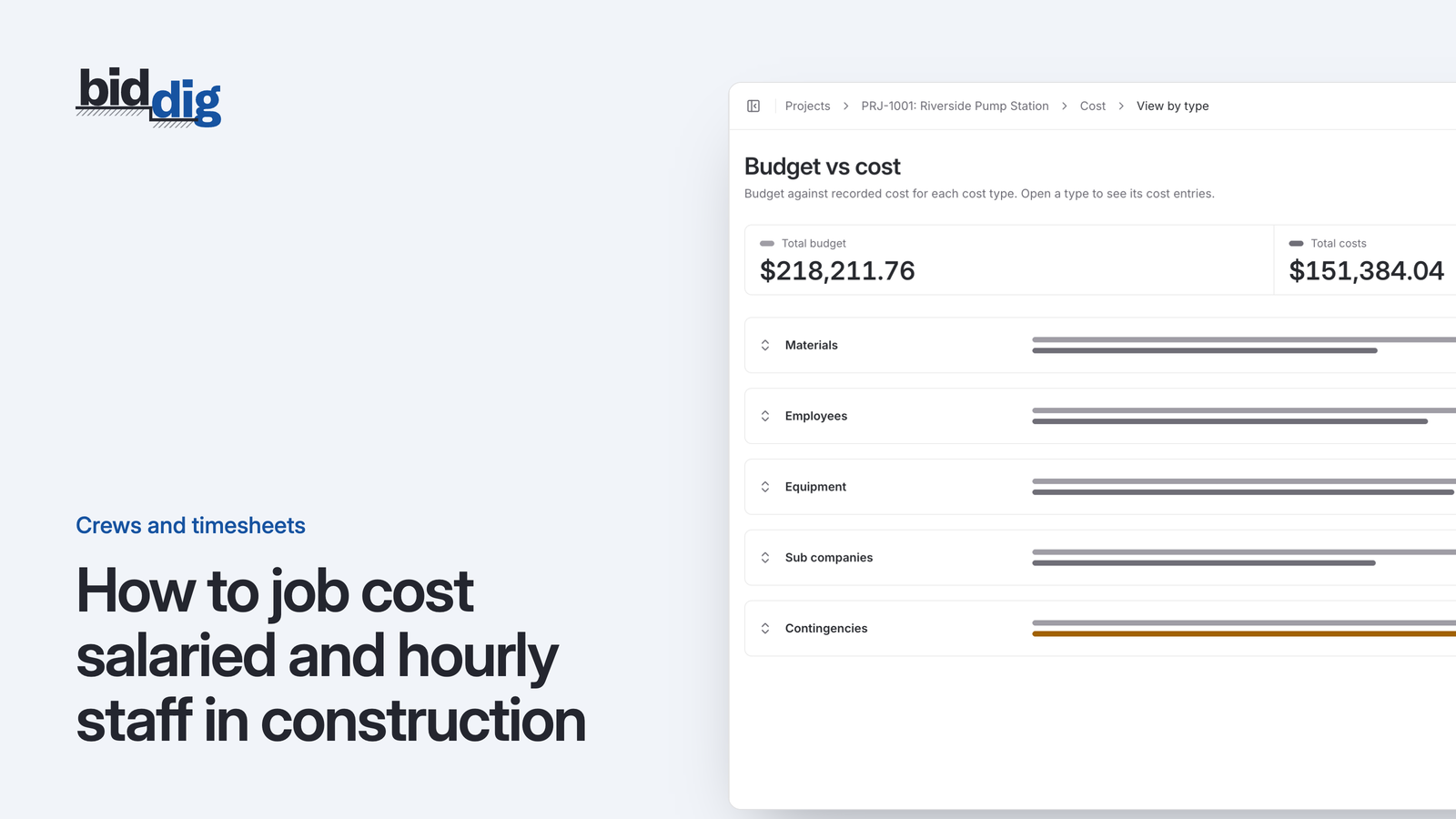
Hourly people cost a job by the hour. Salaried people cost the same whatever they do, which makes it easy to leave them out of job cost or count them twice.
, 6 min read
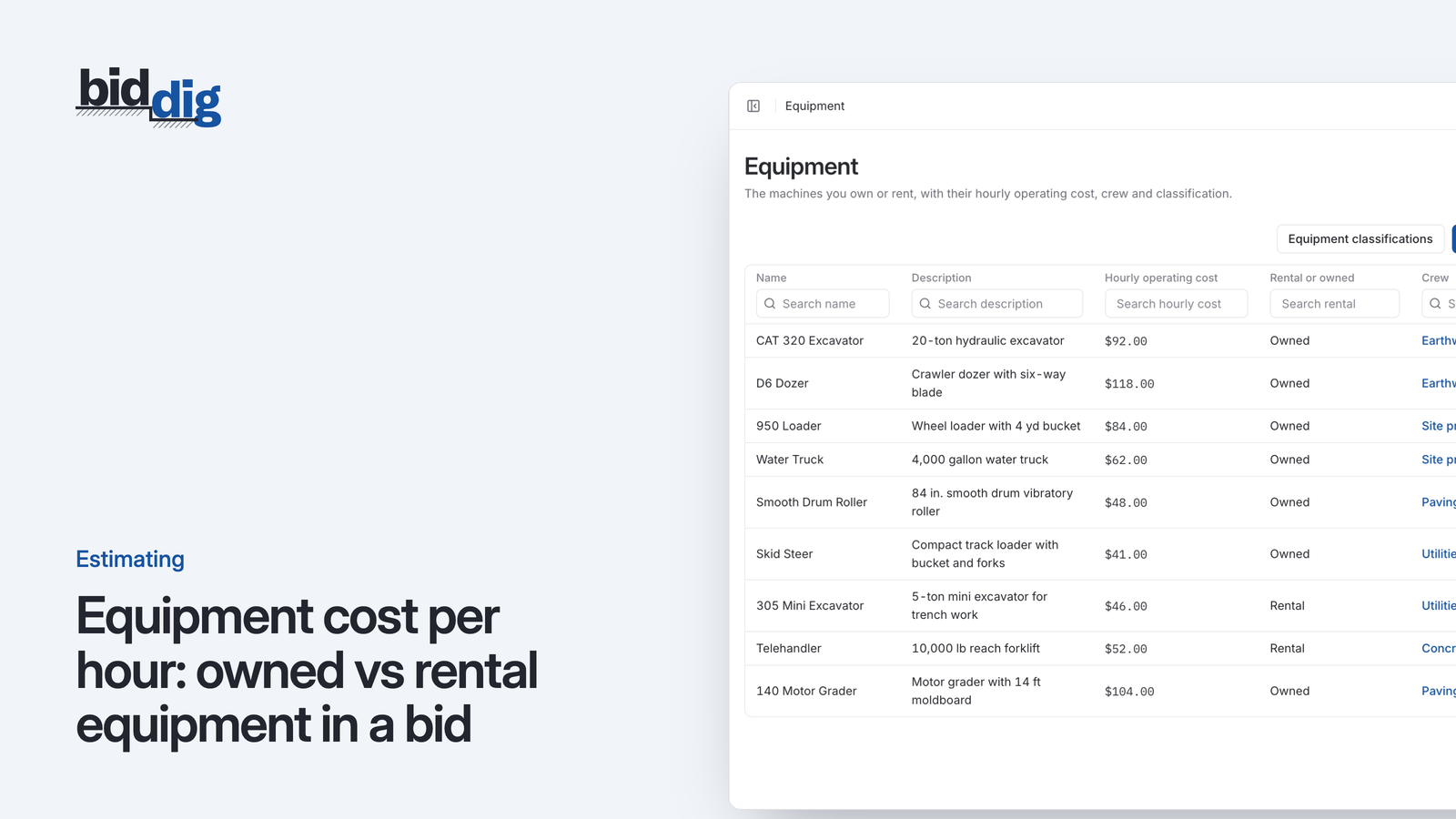
A machine you own and a machine you rent cost you money in different ways. Here is how to work out an hourly rate for each before you put it in a bid.
, 6 min read
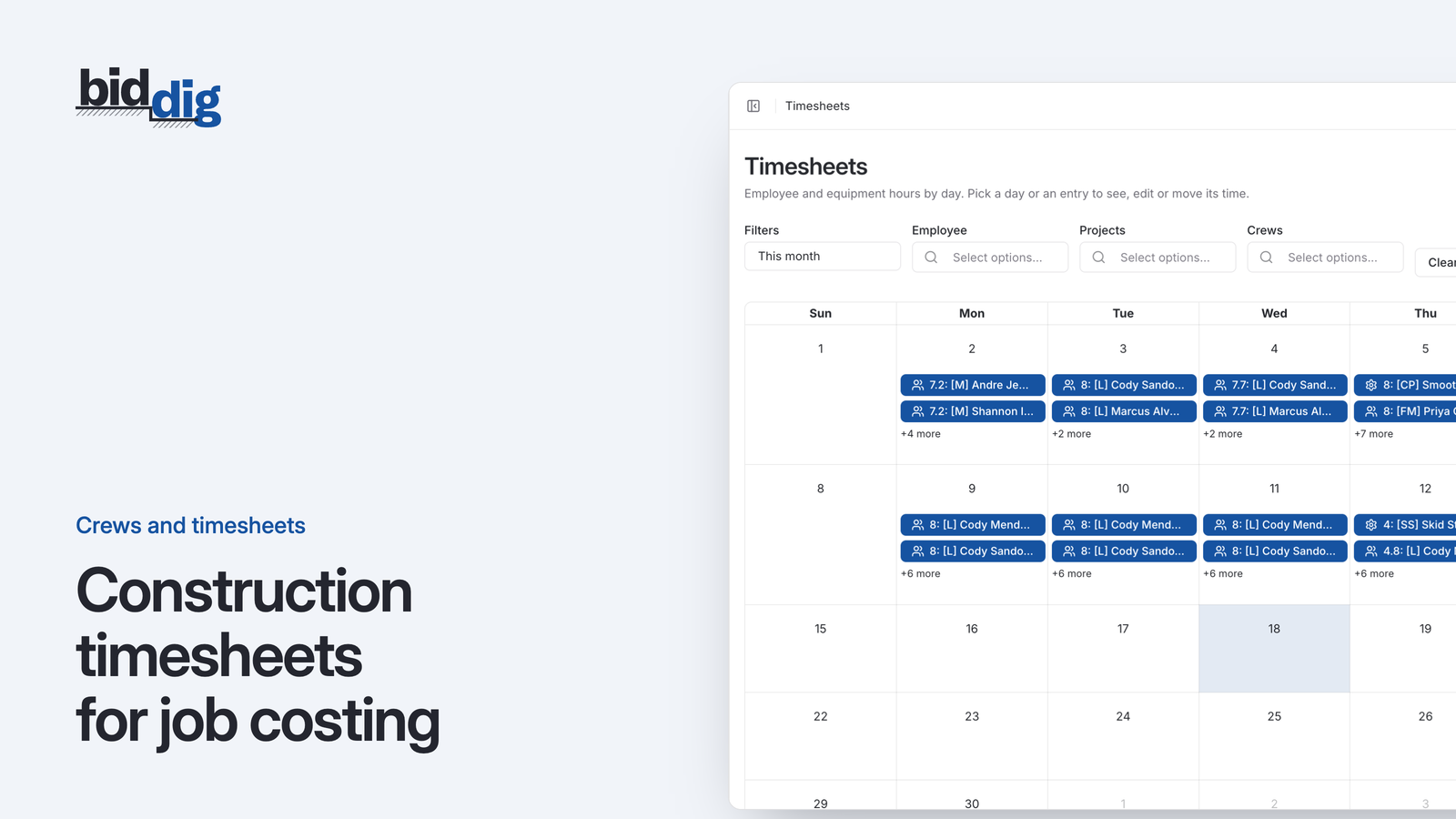
A timesheet that records only the job tells you what payroll will be. One that also records the line item, on the day the work was done, tells you whether the job is making money.
, 5 min read
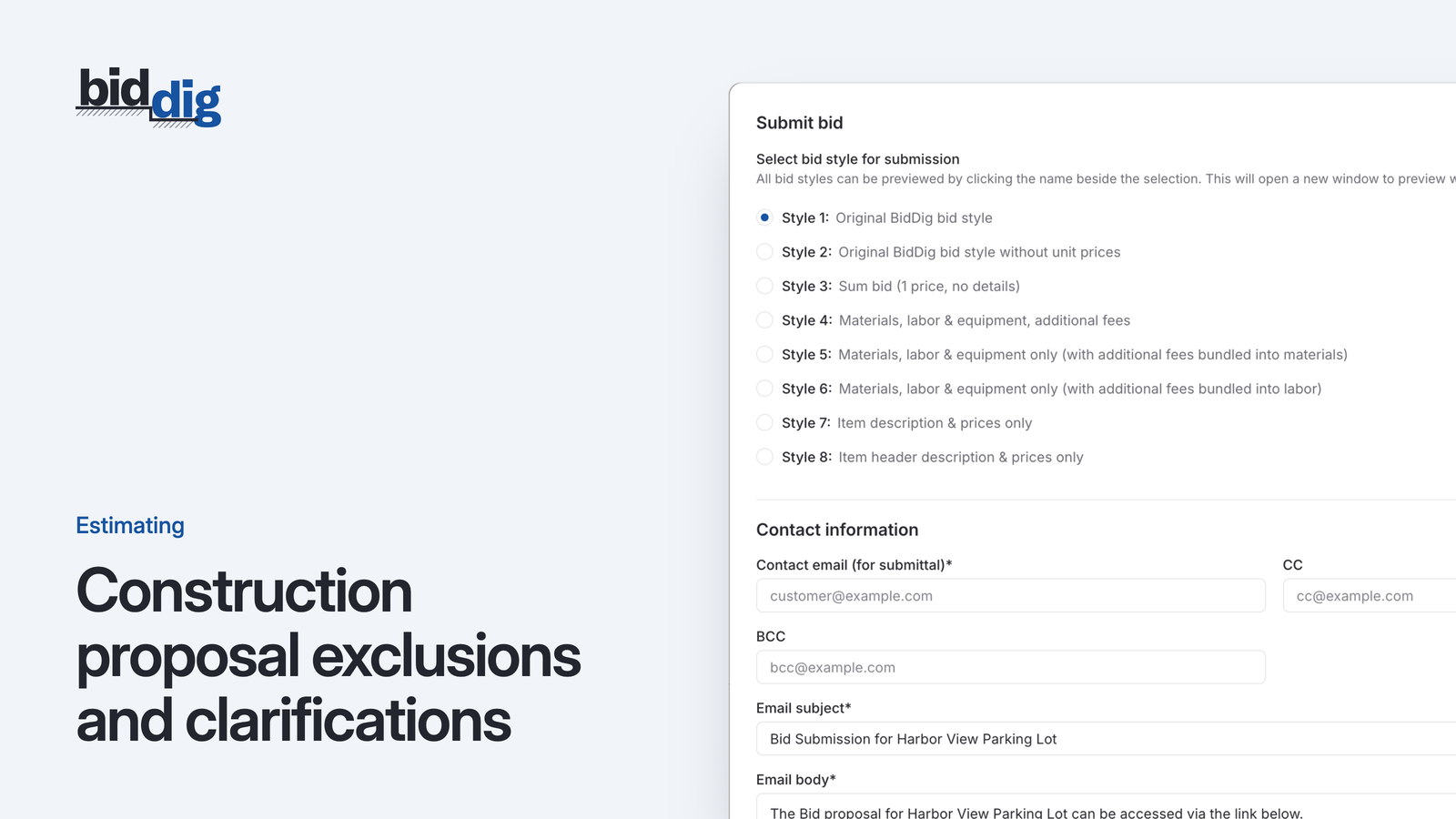
The price says what the job costs. The exclusions and qualifications say what the price covers. Vague ones are the usual start of an argument about who pays for extra work.
, 5 min read
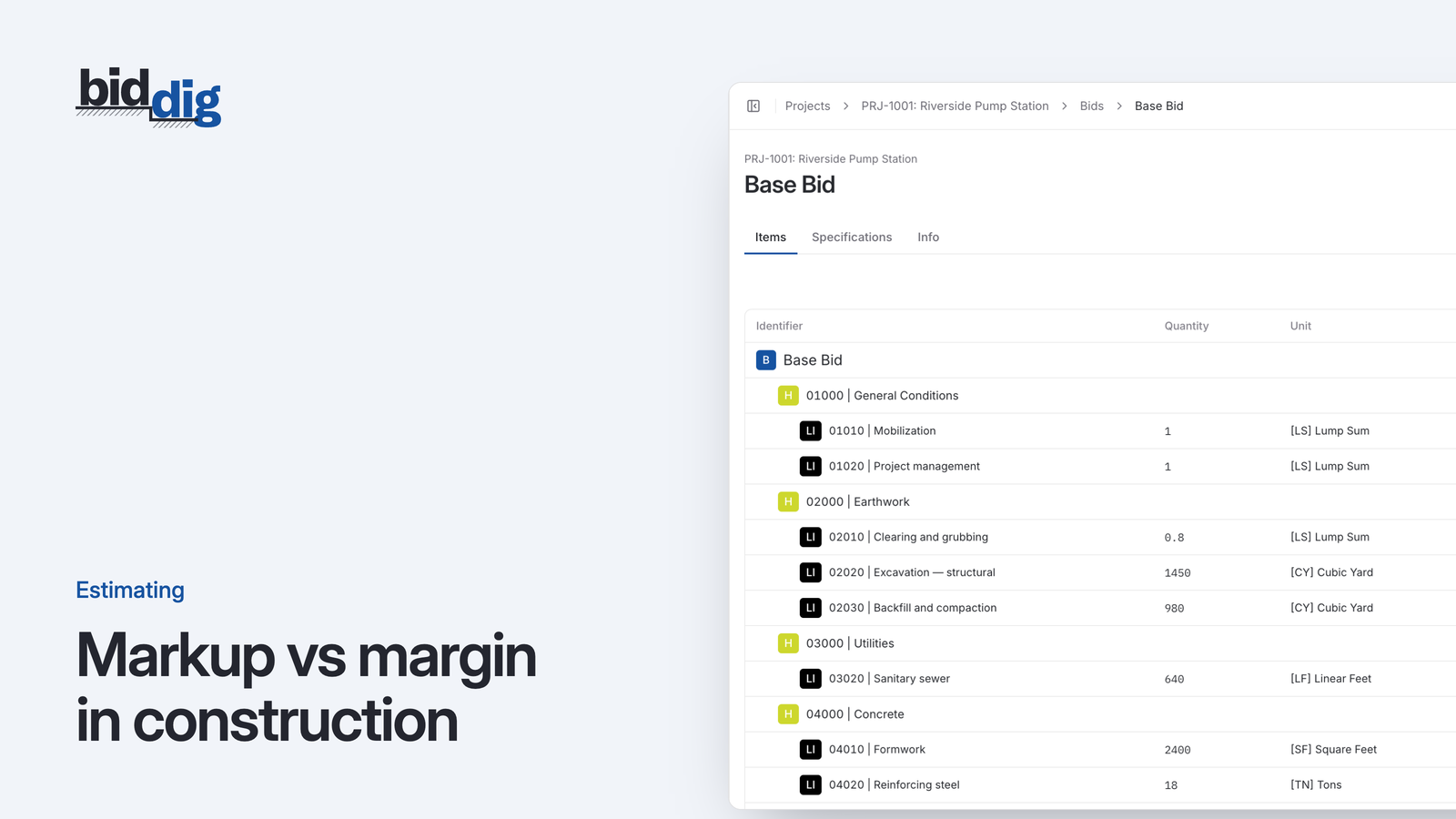
A 20% markup is not a 20% margin. Here is the difference, the formulas for converting one to the other, and a conversion table for pricing a bid.
, 5 min read
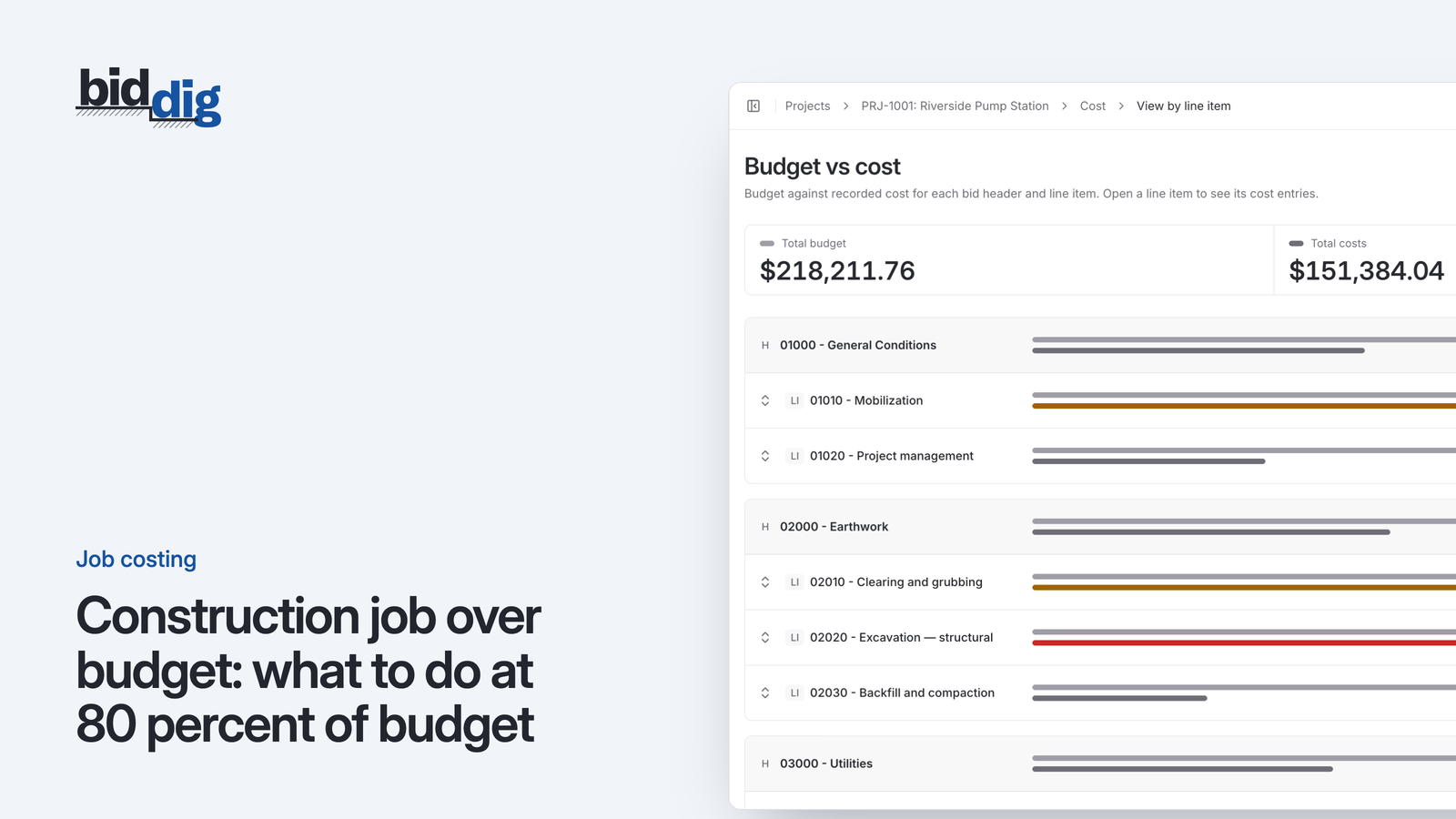
A line at 80 percent of its budget is either nearly finished or in trouble. A few questions tell you which, and what you can still do about it.
, 5 min read
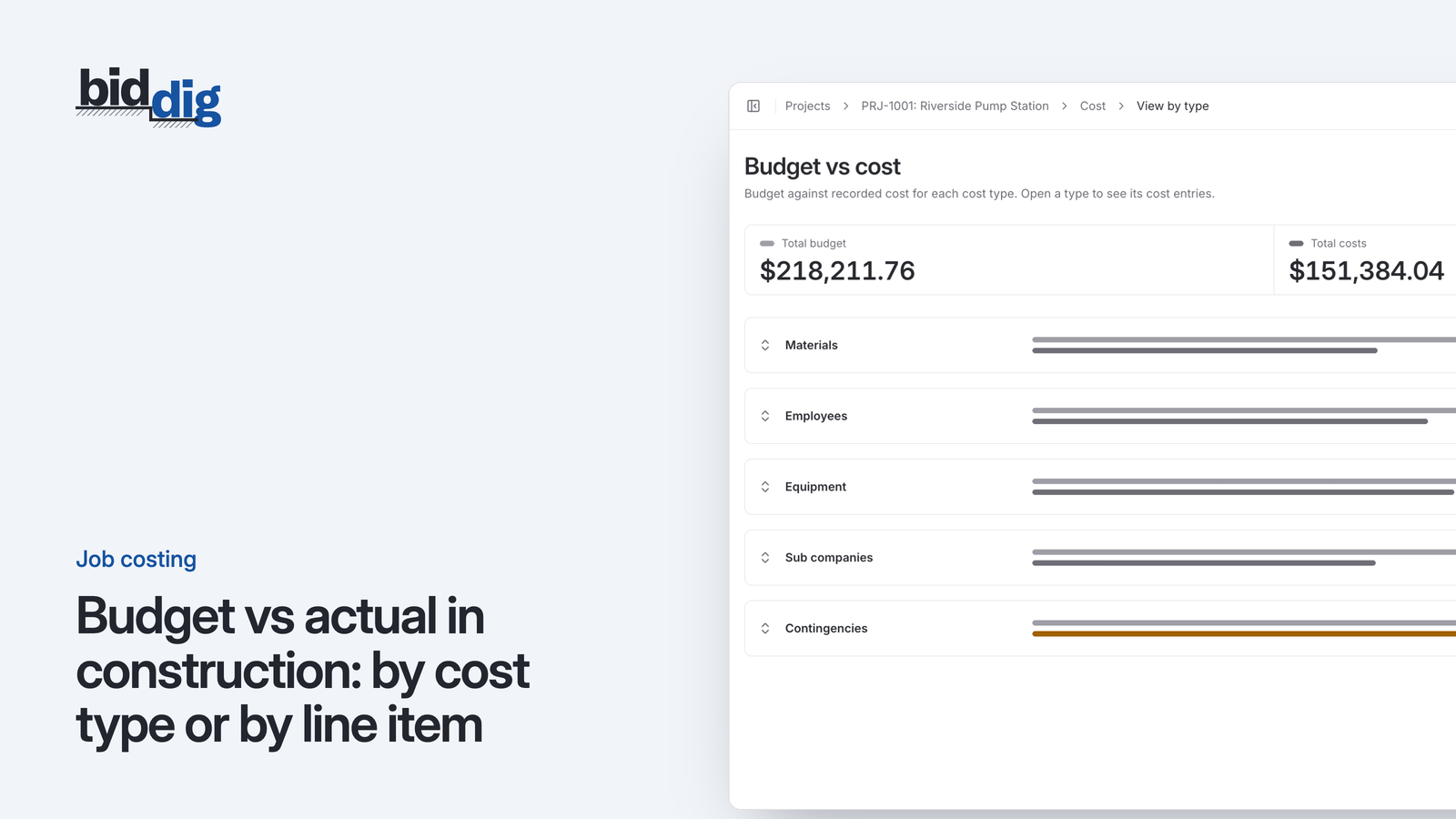
The same job costs can be cut two ways. One tells you what kind of money is going out, the other tells you which piece of work is taking it. You need both, and here is why.
Set up your catalog, build a bid and send the proposal. Then watch the job against the bid as the costs come in.
60-day free trial. No credit card required.