The weekly job cost review meeting for contractors
A job cost report nobody reads changes nothing. A short standing meeting each week, with a fixed order and a short list of decisions, is what turns the numbers into action.
By the BidDig team, , 5 min read
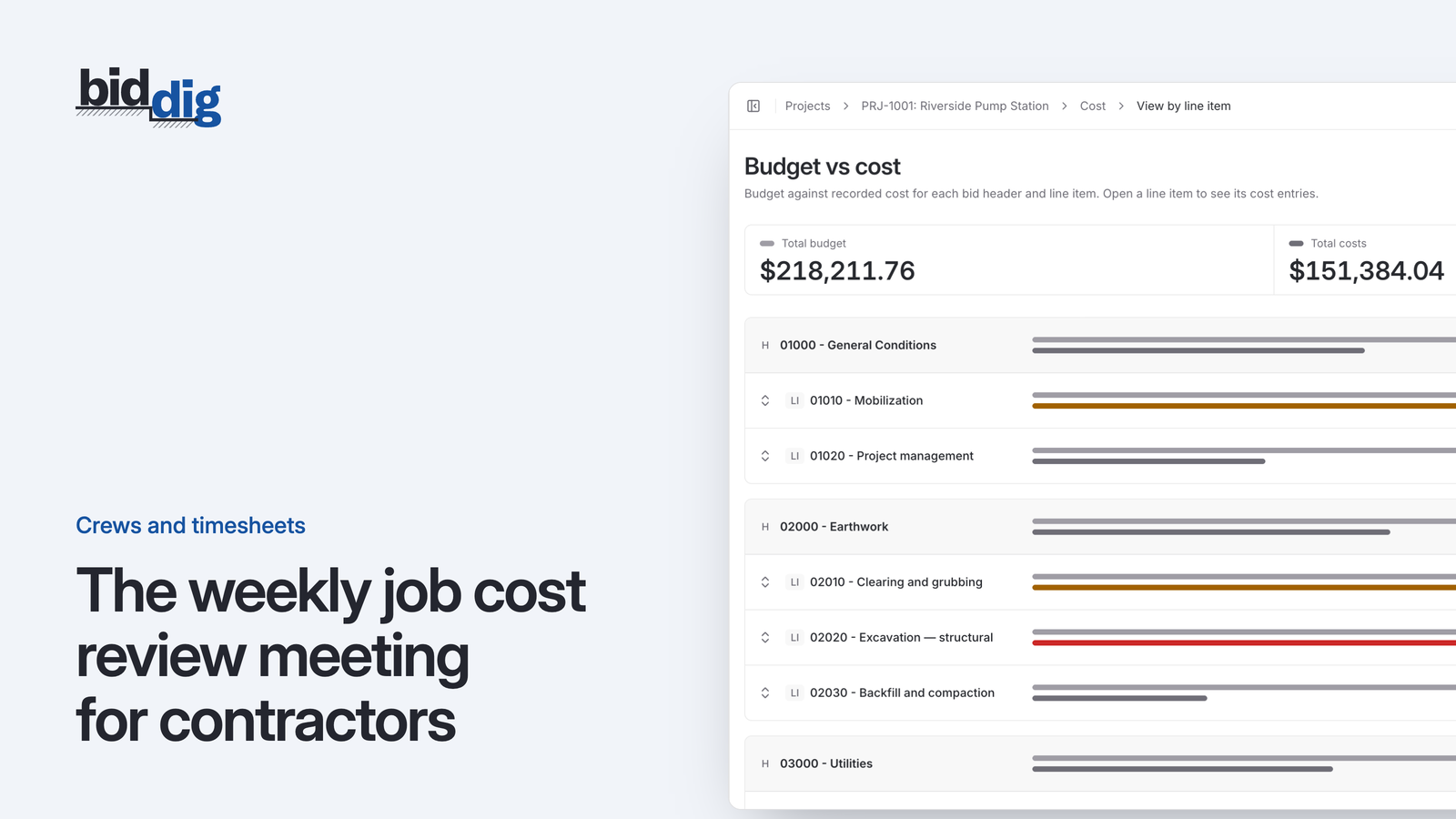
A weekly job cost review is a short standing meeting where the project manager, the superintendent and the owner go through budget vs actual on each active job. They look only at line items that are over or heading over, compare cost to date with percent complete, and leave with a named decision for each one.
The meeting exists because of a common gap. A contractor that tracks job cost can usually produce a report showing budget vs actual for every job. Too often the report gets opened properly twice: once when the job is awarded and once when it is finished and the owner wants to know what happened.
In between, costs pile up unseen. A line item goes over in week three. Nobody notices until week nine, when the work is done, the crew has moved on and there is nothing left to change. The report was accurate the whole time. It was simply never part of anyone's week.
Tracking costs is half the job. The other half is a habit of looking at them while there is still something to decide.
How often should you review job costs?
Monthly is too slow for most construction work. A line item can start and finish inside a month, so a monthly review only ever reports history.
Daily is too noisy. One bad day does not mean a line item is in trouble.
A week is long enough for a trend to show and short enough that most line items are still in progress when you spot a problem. Pick a fixed day and time, early in the week, and keep it.
Who should attend a job cost review meeting?
Keep the group small.
- The project manager for each job under review. They own the numbers and bring them.
- The superintendent, or the foreman on a small job. They know what happened on site and how much of each line item is actually built.
- The owner or operations lead. They can approve the decisions that cost money.
The project manager knows what was spent. The field lead knows what was built and why it took what it took. The review works when those two halves are put side by side. The field does not need to see dollar figures for this. The project manager can ask about a line item in hours and quantities.
What to prepare before the meeting
Two things have to be true before anyone sits down:
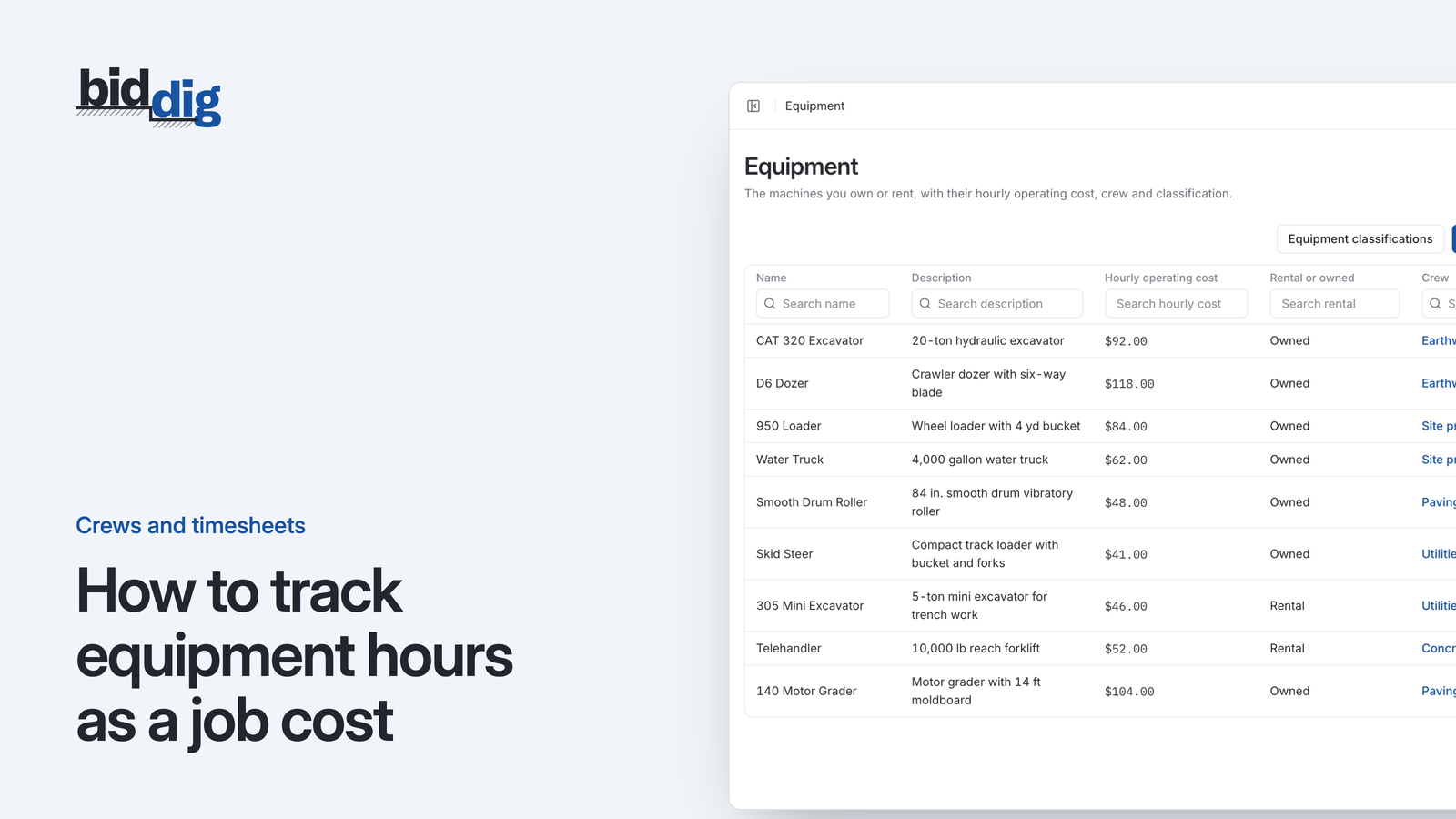
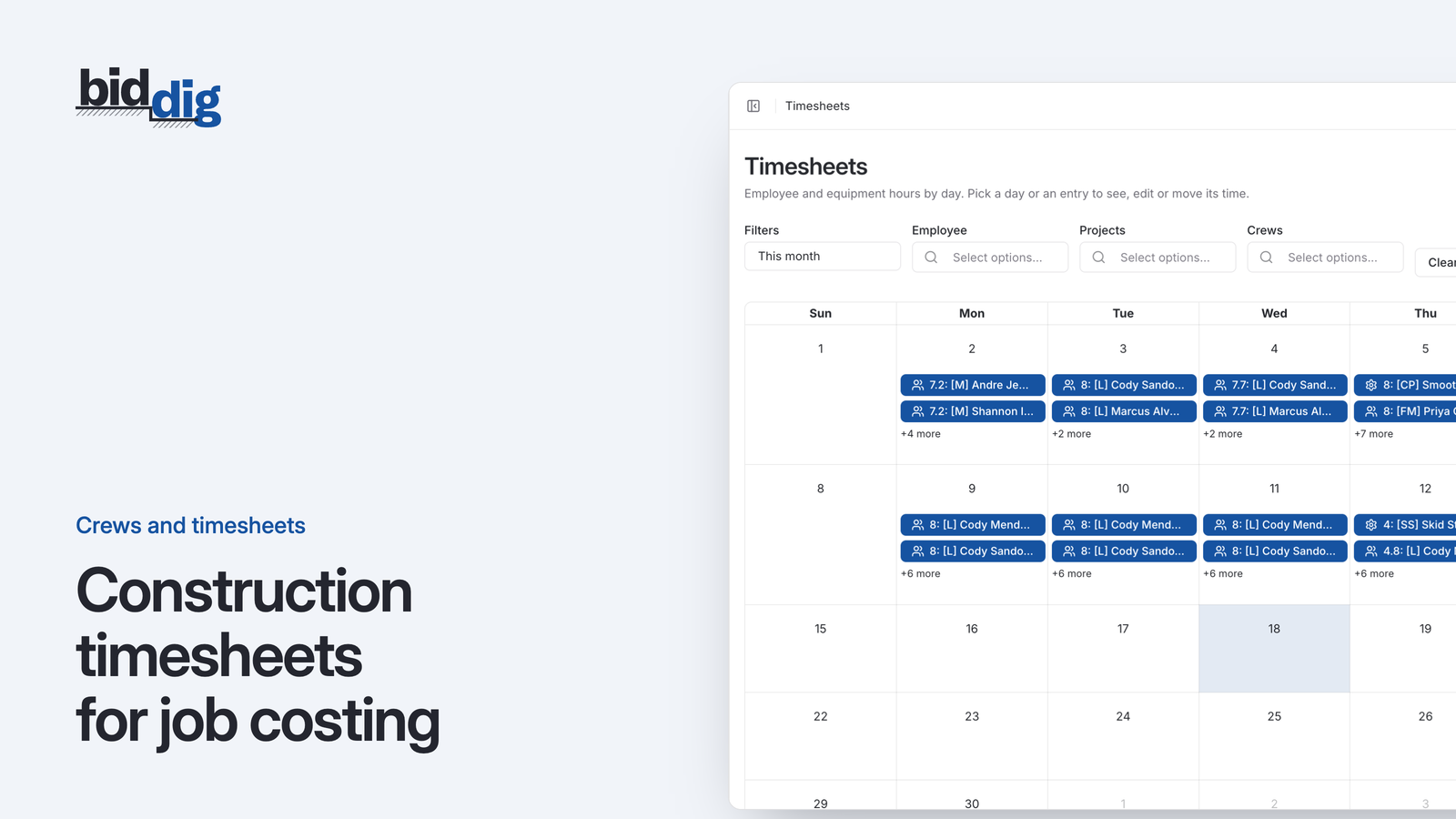
- Hours are in through the end of last week. For people and for machines, booked to line items. If timesheets arrive late, the review is looking at the week before last.
- Material and subcontractor costs are recorded. Invoices sitting on a desk are costs the report cannot see.
The project manager should also have a rough percent complete for each active line item, agreed with the superintendent.
Weekly job cost review meeting agenda
A fixed order keeps the meeting short and stops it turning into a general discussion of the job.
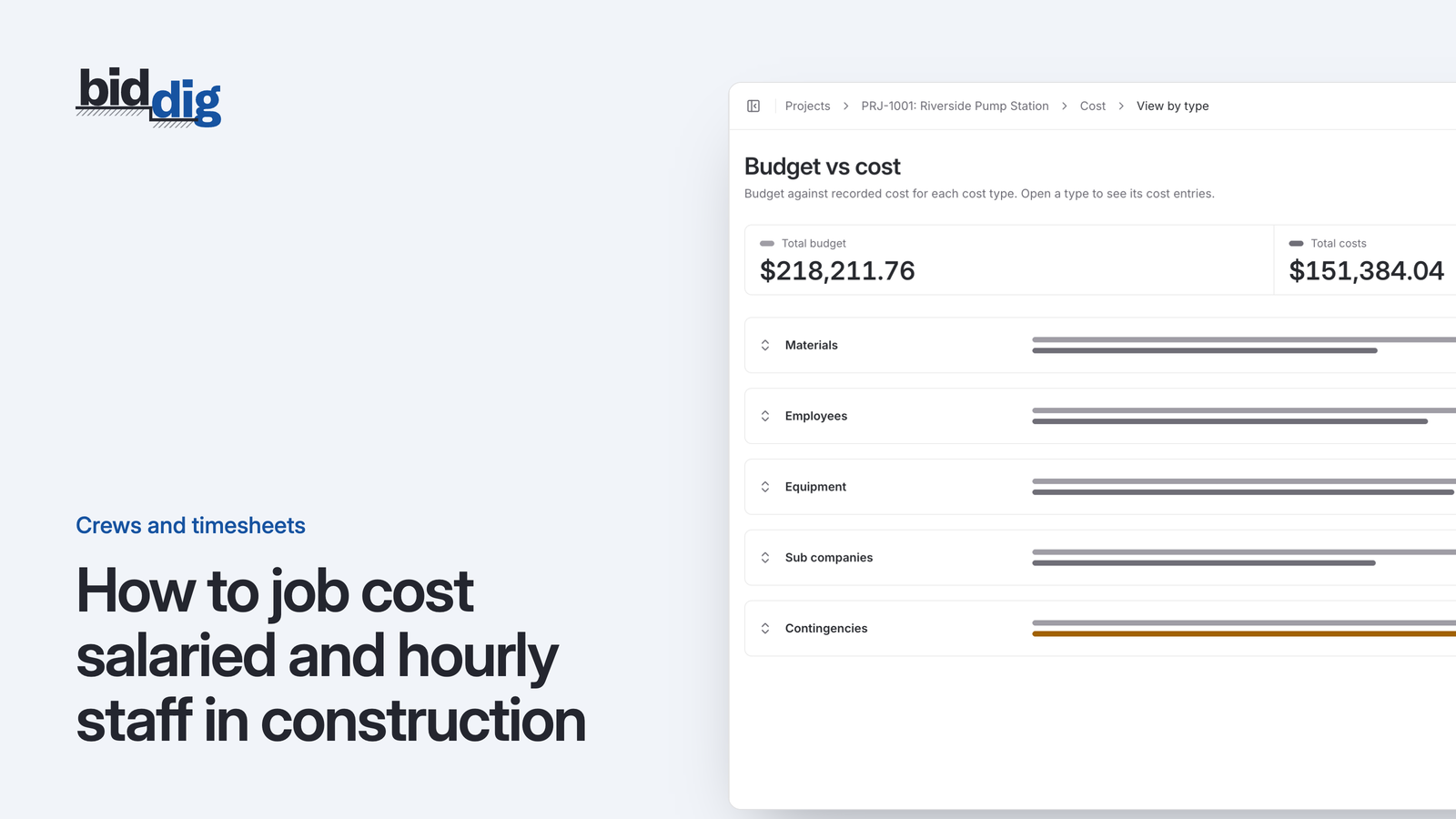
1. The job as a whole, by cost type. Material, labor, equipment, subcontractor and anything else, each against its budget. This takes one minute and shows which kind of cost to worry about.
2. Line items that are over budget. These are already a loss on that line. The question is how much more is coming and whether anything recovers it.
3. Line items that are close to budget with work remaining. These are the most valuable to catch, because there is still time to act.
4. Line items that are well under budget but nearly done. Good news should be checked too. It may be a real saving, or costs that have not been booked yet.
5. Anything booked this week that looks wrong. Hours on a line item that has not started, or a machine on a job it never visited. Fix these now, while people remember.
Skip the line items that are on track. The review is by exception.
How to compare cost to date with percent complete
The common mistake is to judge a line item by how much of its budget is spent. Spend alone says nothing. What matters is spend compared with how much of the work is done. Two sums do it:
- Budget for the work done = budget × percent complete
- Projected final cost = cost to date ÷ percent complete
Example: a line item that looks under budget
Say a line item has a budget of $18,000.
- Cost to date: $13,500, which is 13,500 ÷ 18,000 = 75% of budget
- Work complete, according to the superintendent: 60%
- Cost the budget allowed for 60% of the work: 18,000 × 60% = $10,800
- Over so far: 13,500 − 10,800 = $2,700
At the same rate, the line would finish at 13,500 ÷ 60% = $22,500, which is $4,500 over the $18,000 budget.
On paper this line is still under budget. But it is headed for a $4,500 overrun, and with 40% of the work left there is still room to do something about it. That is the kind of line item this meeting exists to find.
What decisions should come out of a job cost review?
A review that ends with "keep an eye on it" has not finished. For each line item discussed, land on one of a short list of outcomes:
| Outcome | When it applies |
|---|---|
| Change the method or the crew | The work is taking more hours or machine time than planned and there is a better way |
| Raise a change order | The overrun comes from added scope or a changed condition the customer is responsible for |
| Correct the data | Costs or hours were booked to the wrong line item or job |
| Accept it and note it for estimating | The bid was too light, and the next bid for this work should carry more |
| No action | The variance is explained and will not grow |
Write each one down with a name beside it, and start the next week's meeting by reading that list back.
The estimating note matters as much as the rest. A line item that runs over for the same reason on three jobs is a pricing problem, and only the next bid can fix it.
How BidDig supports a weekly job cost review
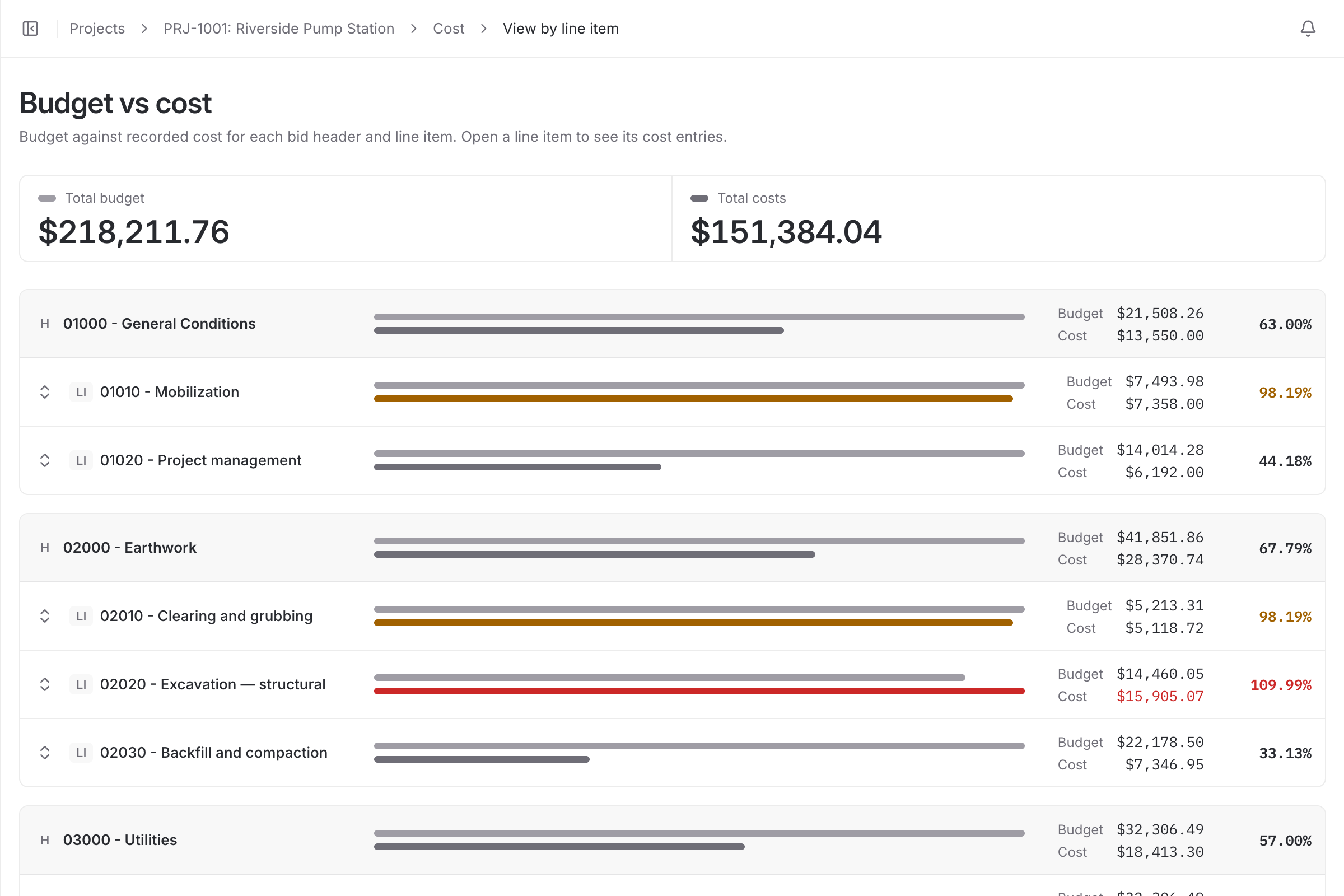
BidDig uses the awarded bid's line items as the budget and shows budget vs actual by cost type and by line item. A line turns orange from 80% of budget and red above 100%, which gives the review its exception list. Project managers see their assigned projects with bids, costs and reports, and the single project overview report exports to PDF or CSV for the meeting. See job costing, and the related posts on budget vs actual by cost type and line item and timesheets that feed job cost. For how the pieces fit together, see construction timesheet software.