, 6 min read
Equipment cost per hour: owned vs rental equipment in a bid
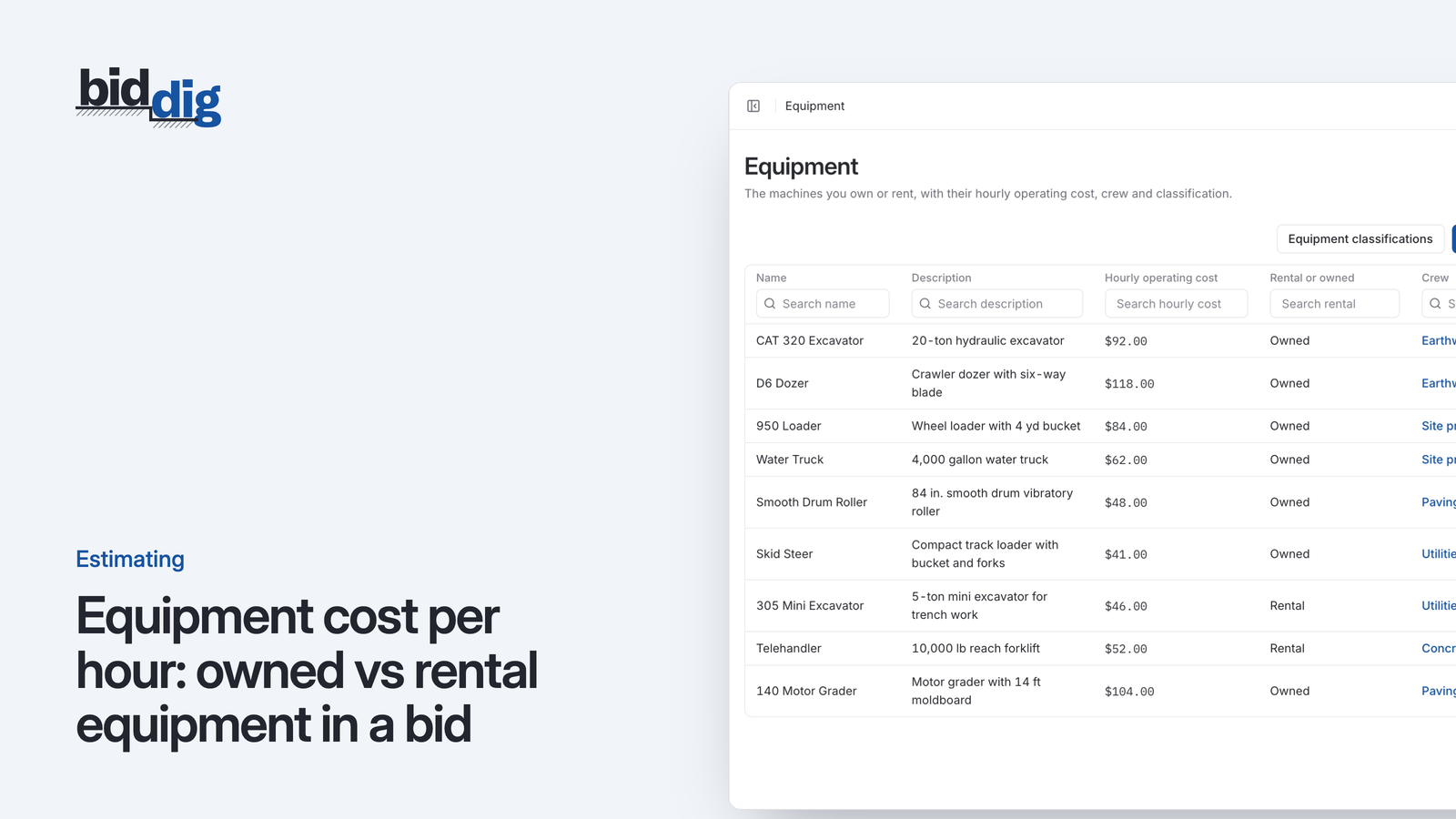
A machine you own and a machine you rent cost you money in different ways. Here is how to work out an hourly rate for each before you put it in a bid.
What your own machine costs for every hour it works.
An owned machine has no rental invoice, so its cost is easy to leave out of a bid. Enter what it cost, what it will sell for, how long you will keep it and what it burns, and see the hourly rate that recovers it.
The starting figures are examples, not recommendations. Replace them with your own.
Split the cost in two. Ownership cost is what the machine costs you for existing: the value it loses each year, plus insurance, taxes and storage. Operating cost is what it costs to run: fuel, maintenance and repairs. Divide the yearly ownership cost by the hours the machine actually works, then add the operating cost per hour.
This calculator leaves out interest on a loan and the operator’s wage. Add finance cost to the yearly figure if you carry it, and price the operator as labor.
The ownership cost is the same whether the machine works 600 hours or 1,400. Halve the hours and the ownership cost per hour doubles. Use the hours the machine really billed last year, not the hours you hoped for, or every bid will under-recover it.
No. For a rented machine, use the rental rate divided by the hours you expect to work it in the rental period, plus fuel. This calculator is for machines you own.
What you realistically expect to sell or trade the machine for at the end of the period you entered. If you are unsure, try a low and a high figure and see how much the hourly rate moves.
No. The operator is labor and is priced separately, at their burdened rate.
, 6 min read
A machine you own and a machine you rent cost you money in different ways. Here is how to work out an hourly rate for each before you put it in a bid.
, 6 min read
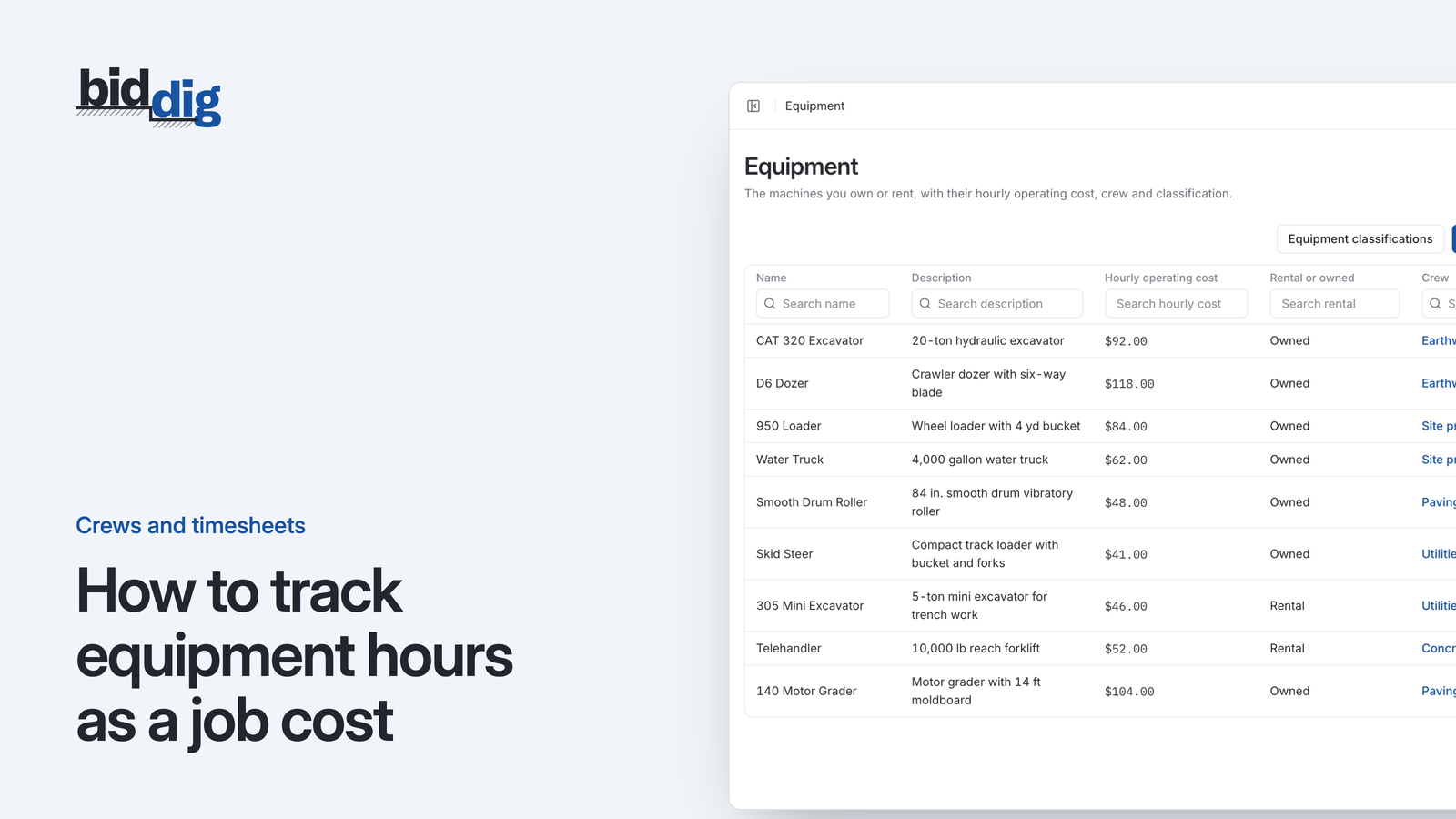
Owned machines do not send an invoice, so their time quietly drops out of job cost. Here is how to record machine hours on the job and charge them to the work they did.
BidDig does this arithmetic on every bid from the rates you set once. See estimating and bidding.
Set up your catalog, build a bid and send the proposal. Then watch the job against the bid as the costs come in.
60-day free trial. No credit card required.